
15
Oct
2026-10-15
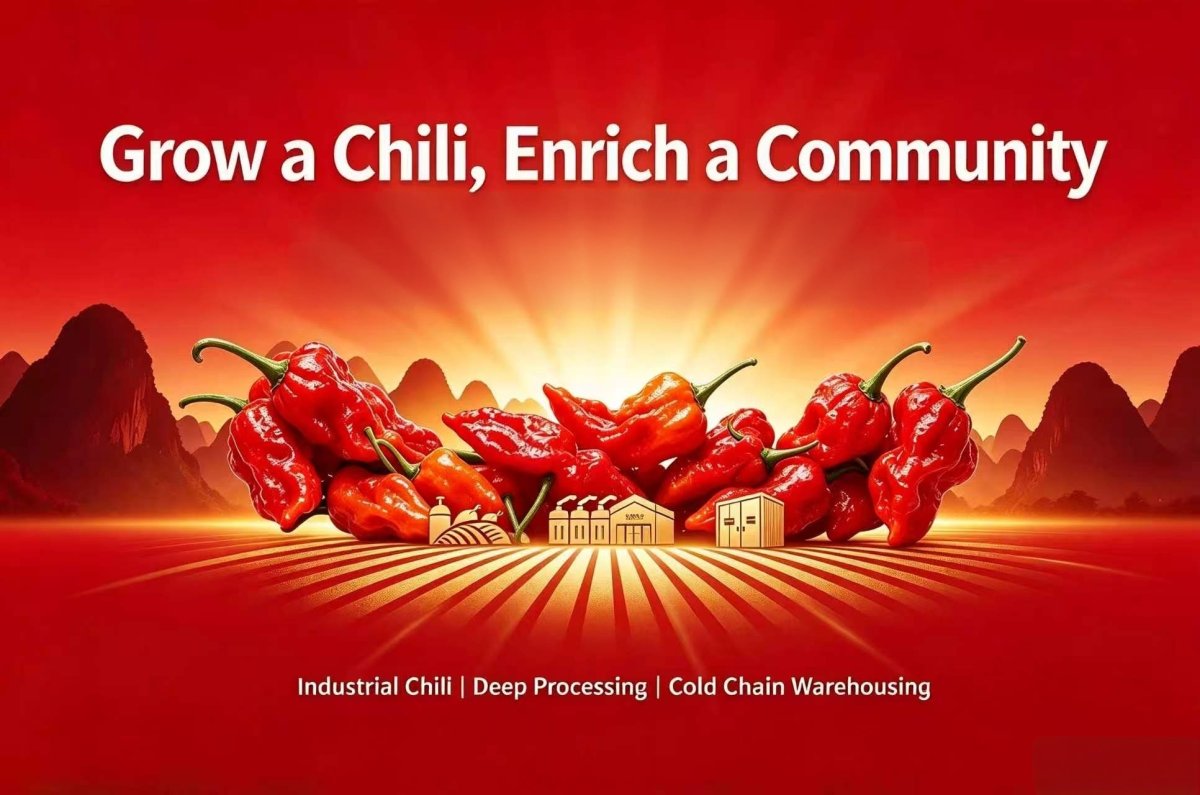
Major Signing! Jindao Capsaicin Joins Hands with Weijie Trading to Build Large-Scale Industrial Chili Planting Base in Mashan County
On October 13, 2026, Jindao Capsaicin Technology and Mashan Weijie Trading Co., Ltd. formally signed the cooperation agreement for the Mashan County Large-Scale Industrial Chili Planting and Auxiliary Facilities Project. The two parties will jointly invest to establish a joint venture — Guangxi Mashan Weijie Jindao Capsaicin Agricultural Development Co., Ltd. A full-chain industrial chili…
Read More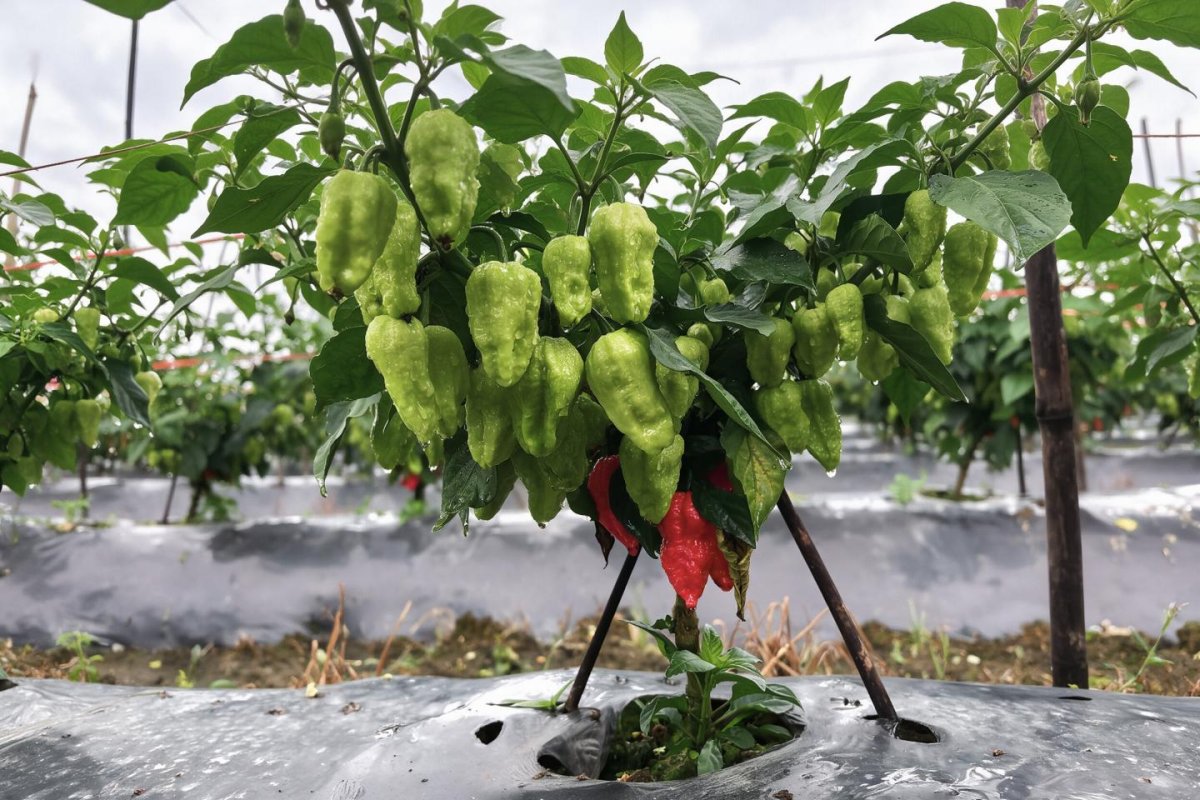
13
Oct
2026-10-13
The “Spicy Girl” in Biopesticides: Pests Flee in Dread
Introduction In farmland lives a "spicy girl" that strikes terror into pests — capsaicin. It is a natural defensive agent produced by pepper plants and a rising star in global green agriculture. While conventional chemical pesticides engage pests in head-on combat, capsaicin relies on its natural neuro-repellent mechanism to drive pests away voluntarily. I. The…
Read More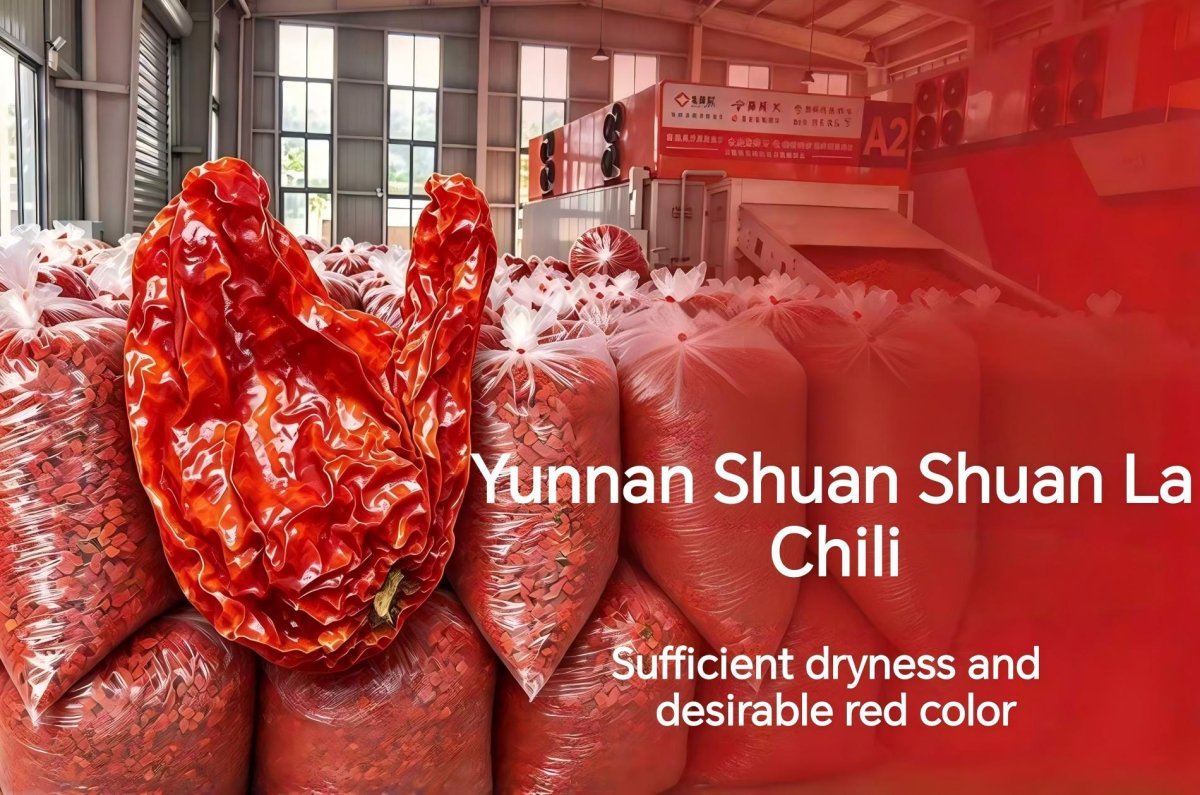
10
Oct
2026-10-10
Yunnan Grows Palm-Shaped Chili Peppers! Unbelievably Spicy, Propping Up Rural Characteristic Industries
Have you ever seen a chili pepper that looks like a "palm"? In the mountains and fields of Yunnan, a peculiarly shaped "palm chili" has quietly gained popularity. Its fruits stretch upward with distinct "fingers", just like tiny flaming palms. With a Scoville Heat Unit (SHU) as high as 800,000 to 1,000,000, one bite will…
Read More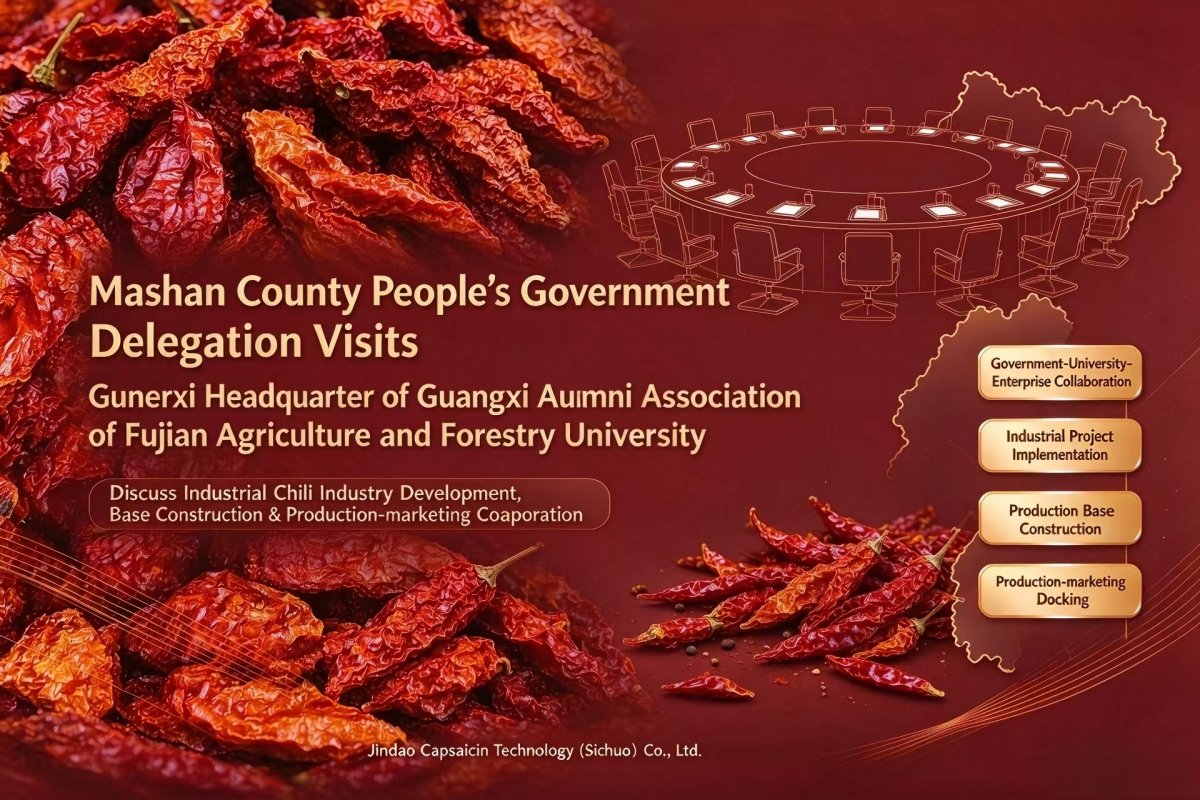
30
Sep
2026-09-30
Government-Enterprise Collaboration Paves New Path
Mashan County Government Delegation Visits Fujian Agriculture and Forestry University Alumni Association in Guangxi to Discuss 1 Billion RMB Industrial Pepper Project Recently, a government delegation from Mashan County, Nanning — led by the Deputy Secretary of the County Party Committee and County Mayor — visited the headquarters of the Fujian Agriculture and Forestry University…
Read More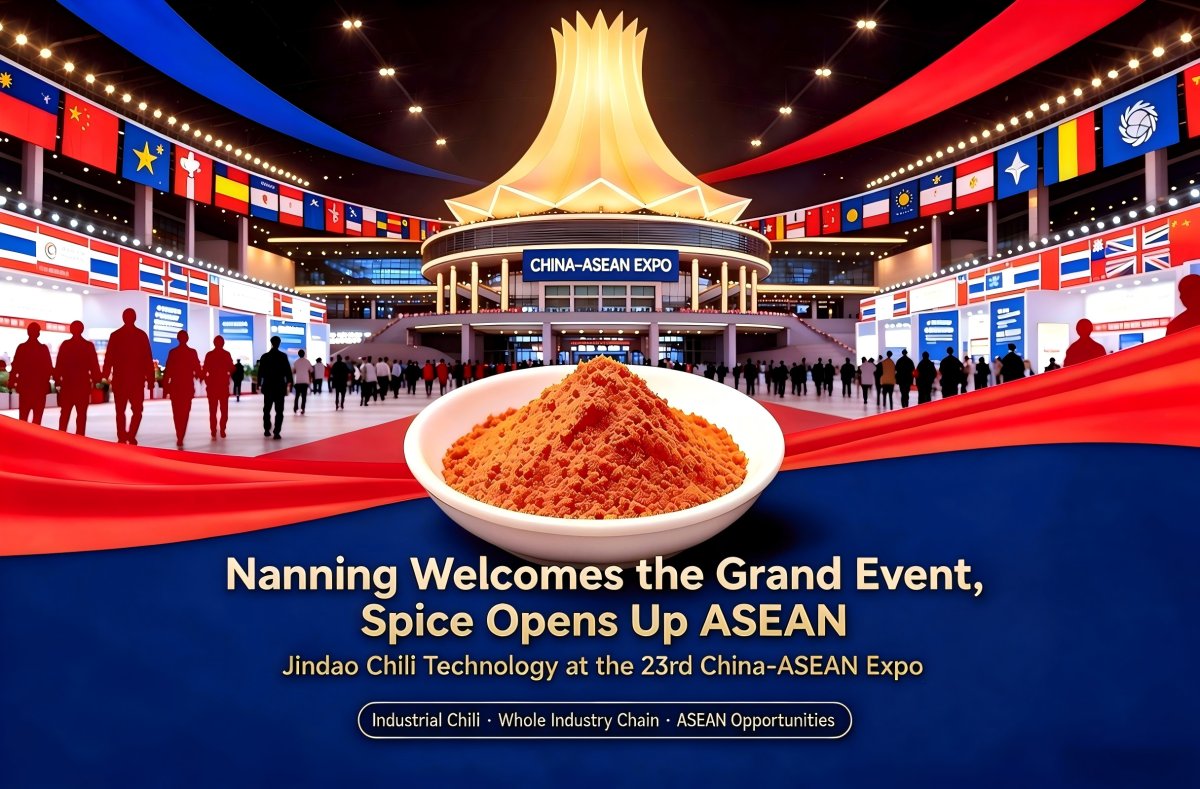
22
Sep
2026-09-22
Jindao makes its debut at the 23rd China-ASEAN Expo, a Chinese chili’s answer to ASEAN
From September 17 to 21, the 23rd China‑ASEAN Expo grandly opened in Nanning, Guangxi. Under the theme of “Sharing 3.0 Opportunities, Creating a Better Life Together”, the expo covered a total exhibition area of 170,000 square meters with over 3,400 participating enterprises. For the first time after its expansion, all 11 ASEAN nations gathered in…
Read More
18
Sep
2026-09-18
New Product Launch | When Chili Meets the Ocean: Jindao Capsaicin Launches Capsaicin-Modified Eco-Friendly Marine Anticorrosive and Antifouling Coating, Redefining Marine Protection
What can a chili do? It can be the soul seasoning on the dining table, an effective analgesic in the medical field, or a core raw material for security equipment. But what you may not expect is that it can also guard 10,000-ton giant ships as they sail across the vast deep blue ocean. Today,…
Read More