
The number of lateral branches directly affects planting density, yield, and cultivation management costs in pepper, yet its genetic regulatory mechanisms remain unclear. Recently, the College of Horticulture at Hunan Agricultural University, in collaboration with several research institutions, systematically identified the origin and evolution of the plant BZR gene family. Using the pepper pan-genome, the team cloned a key transcription factor, CaBZR1.2, and revealed a molecular mechanism by which it antagonistically regulates lateral branch development through interaction with the energy-sensing kinase subunit CaSnRK1β2. The findings were published in Horticulture Research under the title “CaBZR1.2 interacts with CaSnRK1β2 to regulate lateral branch development in pepper.”
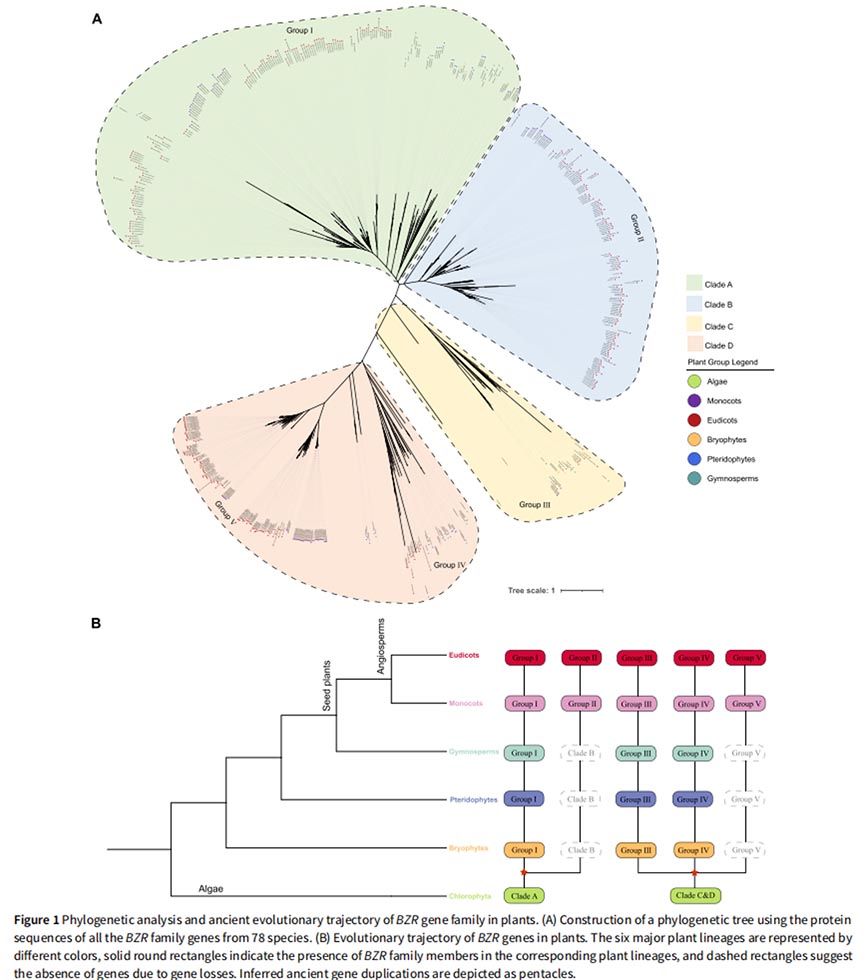
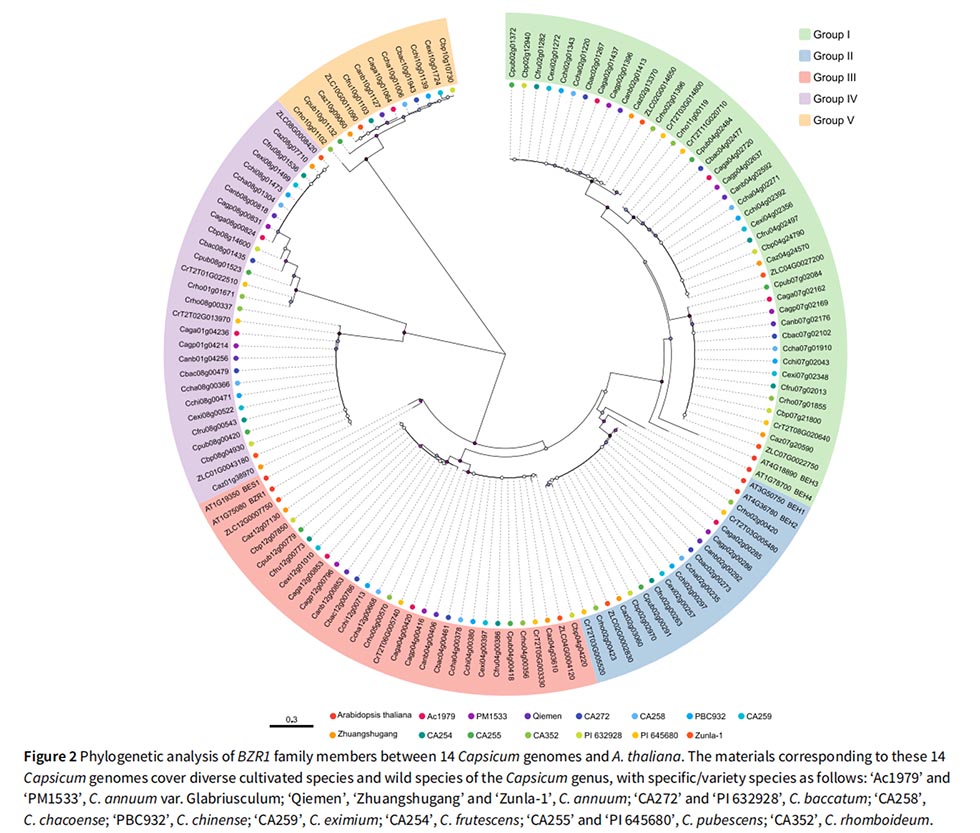
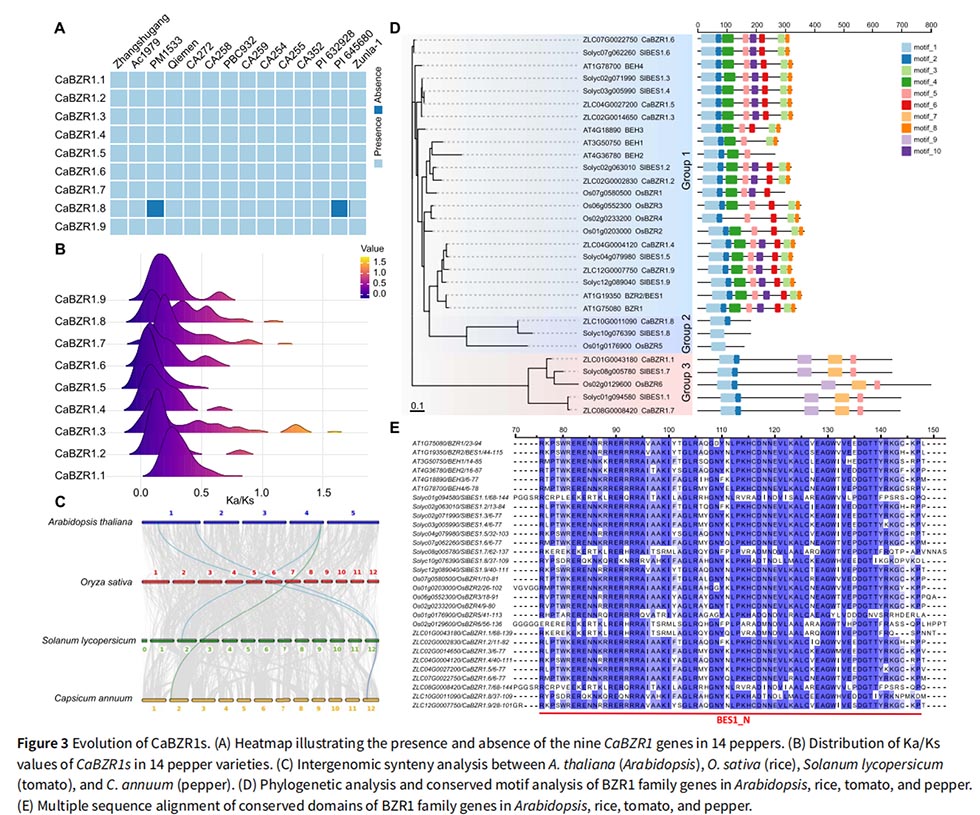
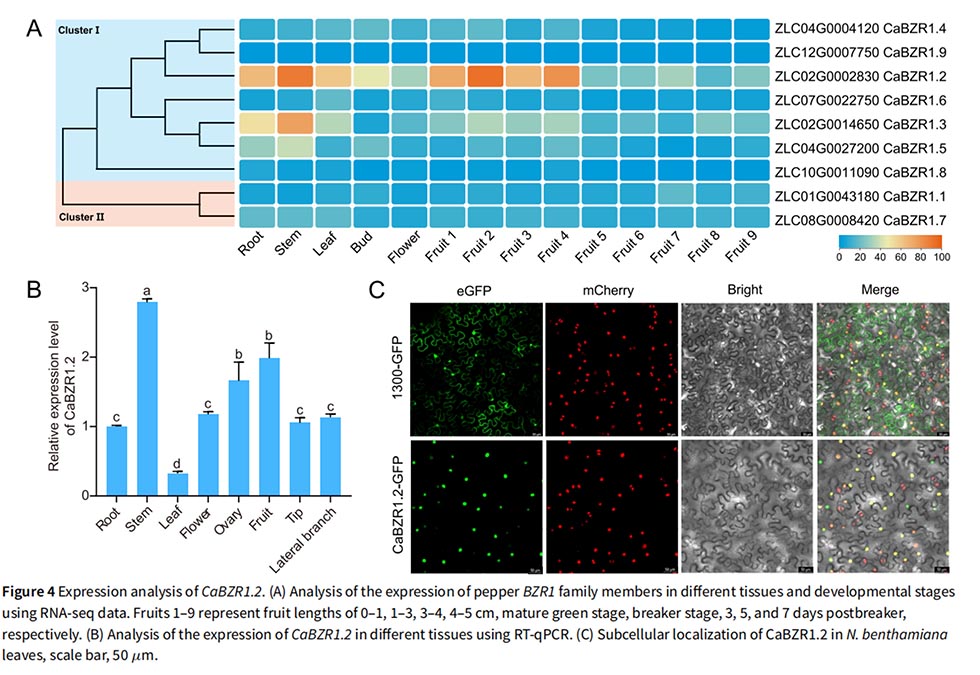
The research team first conducted a phylogenetic analysis of 78 species spanning algae to angiosperms. They found that the BZR gene family originated in charophytes, underwent multiple expansion events in land plants, and ultimately formed five stable subgroups in angiosperms. Subsequently, using a pepper pan-genome comprising 14 cultivated and wild accessions, the researchers identified nine members of the CaBZR1 gene family. Among them, CaBZR1.2 showed high expression in stems, ovaries, and young fruits and was localized in the cell nucleus, suggesting a role in transcriptional regulation.
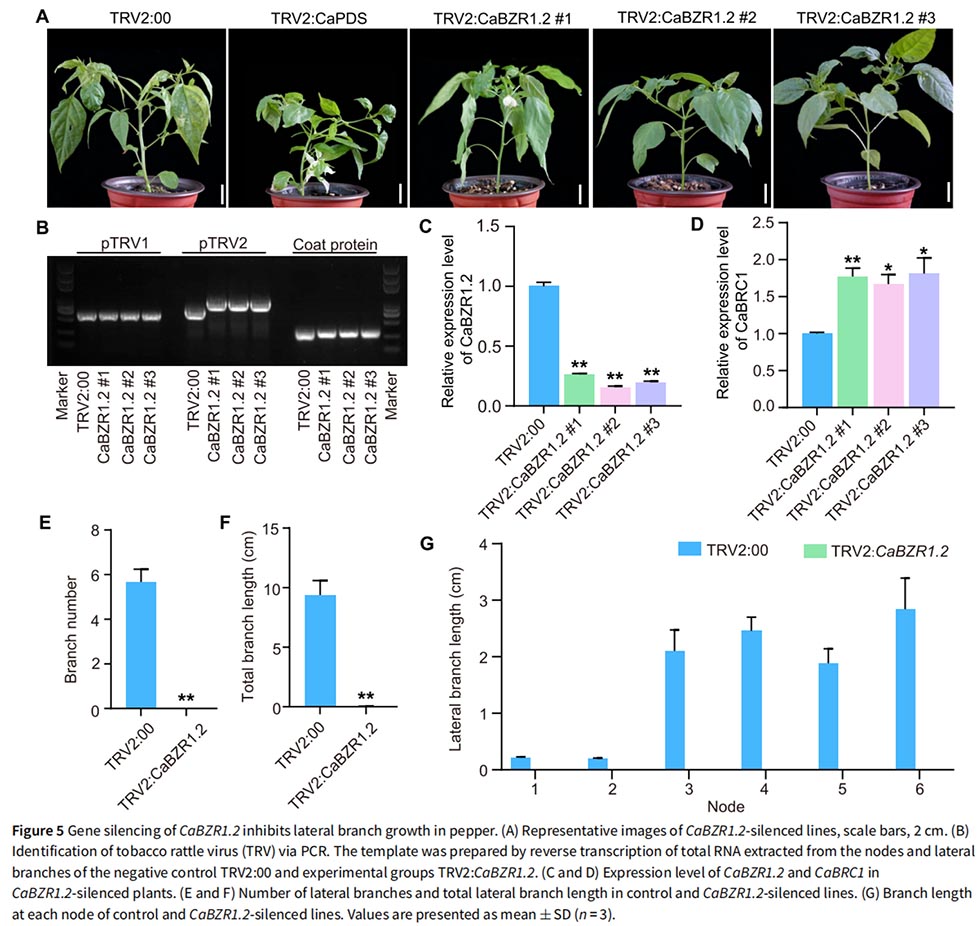
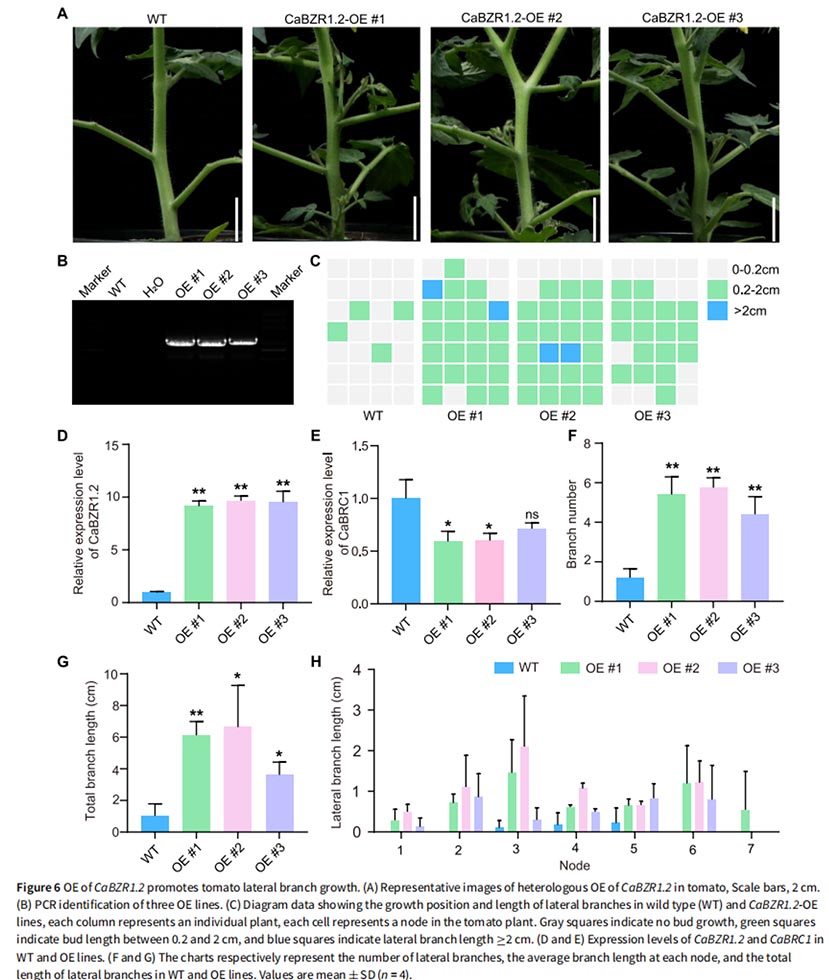
By suppressing endogenous CaBZR1.2 expression in pepper through virus-induced gene silencing (VIGS), the researchers found that both lateral branch length and branch number were significantly reduced, while expression of the branch-inhibitory gene CaBRC1 was markedly upregulated. In contrast, heterologous overexpression of CaBZR1.2 in tomato significantly increased both the number and length of lateral branches. Together, these forward and reverse genetic results demonstrated that CaBZR1.2 is a positive regulator of lateral branch development in pepper.
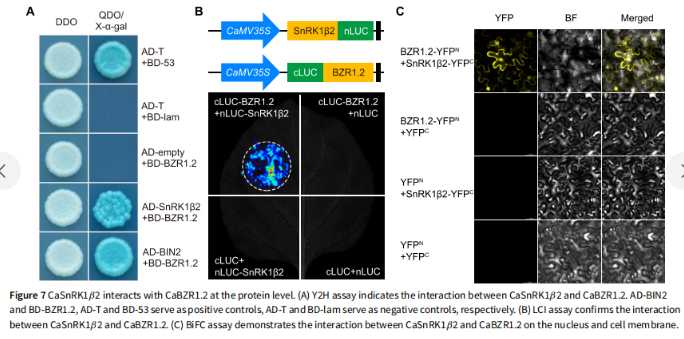
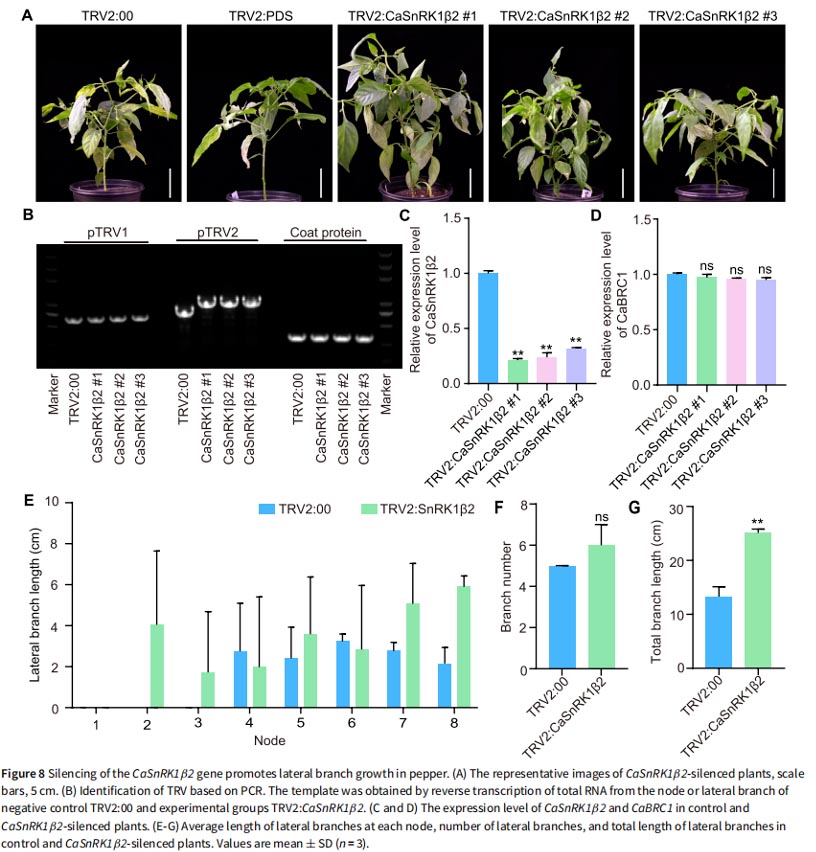
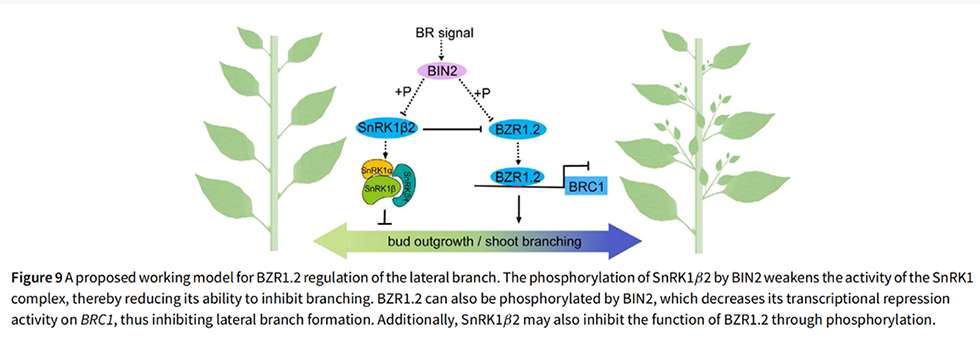
To elucidate its mechanism of action, the researchers screened a pepper cDNA library using yeast two-hybrid assays and identified CaSnRK1β2, a regulatory subunit of the SnRK1 kinase complex, as an interacting protein of CaBZR1.2. Luciferase complementation imaging and bimolecular fluorescence complementation assays further confirmed their physical interaction at the cell nucleus and plasma membrane. Phenotypic analysis showed that silencing CaSnRK1β2 resulted in significantly elongated lateral branches, the opposite phenotype to that caused by silencing CaBZR1.2, indicating that the two proteins antagonistically regulate lateral branch development. Further analysis suggested that BIN2, a key kinase in the brassinosteroid (BR) signaling pathway, may coordinately regulate the activity of both BZR1.2 and SnRK1β2 through phosphorylation, thereby integrating hormonal signaling and energy metabolism to precisely control lateral branch growth.
In conclusion, this study provides the first systematic characterization of the role of the BZR1 transcription factor in pepper lateral branch development. It reveals a novel molecular model in which CaBZR1.2 and CaSnRK1β2 interact antagonistically to regulate branch formation, providing important genetic resources and theoretical support for molecular design breeding of pepper plant architecture. Through precise regulation of CaBZR1.2 or CaSnRK1β2 expression, it may become possible to optimize lateral branch number according to production needs, thereby balancing planting density and yield per plant.
Disclaimer: The information is sourced from industry research on chili peppers; please contact us for removal in the event of copyright infringement.