High-throughput phenotyping is a crucial tool for selecting plant traits and enhancing breeding efficiency; however, the impact of the distance between the camera and the target object on image acquisition accuracy has received limited attention in pepper phenotyping research. Recently, a research team comprising members from the Rural Development Administration (RDA), the National Institute of Agricultural Sciences, and Jeju National University (South Korea) systematically evaluated how varying camera-to-object distances affected the accuracy of RGB imaging during the vegetative and reproductive growth stages of pepper plants. They determined the optimal imaging parameters for phenotyping specific plant organs. These findings were published in the academic journal Scientific Reports under the title “Digitalised phenotyping of pepper (Capsicum spp.) using effective RGB imaging and optimised camera positioning.”
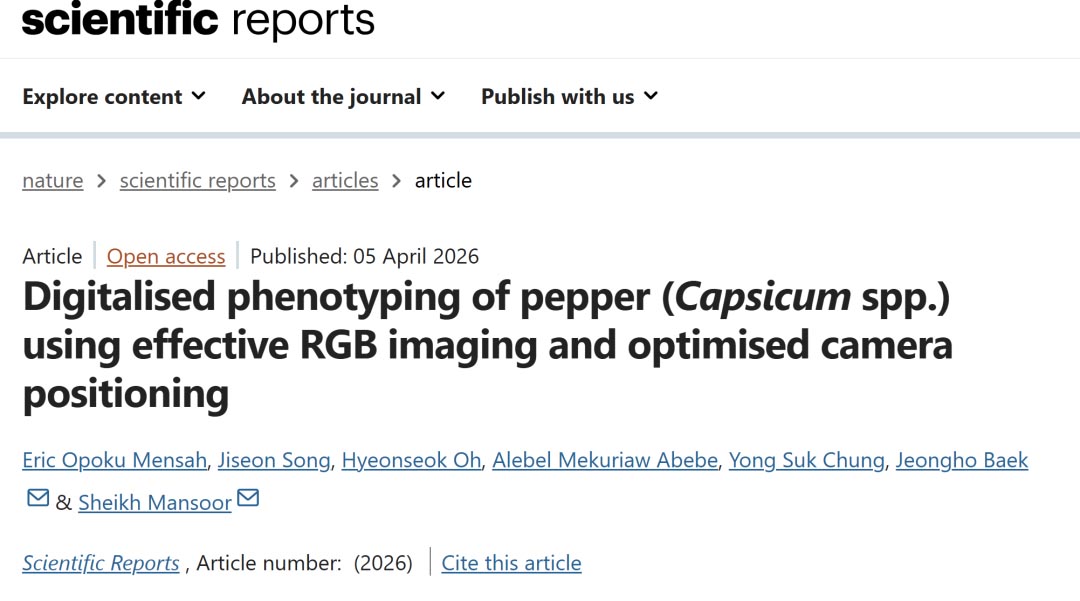
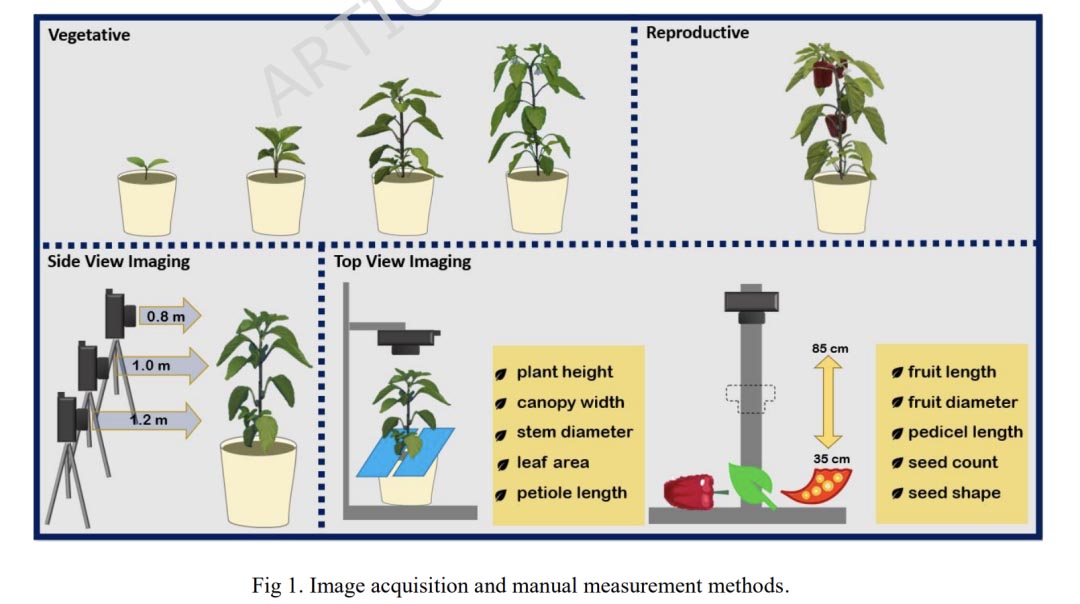
This study utilized four genotypes—three cultivars and one botanical variety of pepper. RGB images were captured under greenhouse conditions during the vegetative stage (side view: 0.8, 1.0, and 1.2 m; top view: dynamically adjusted between 0.6 and 1.0 m) and the reproductive stage (leaves: 0.55–0.85 m; fruits: 0.45–0.85 m; seeds: 0.35–0.85 m), followed by correlation analysis against manual measurements.
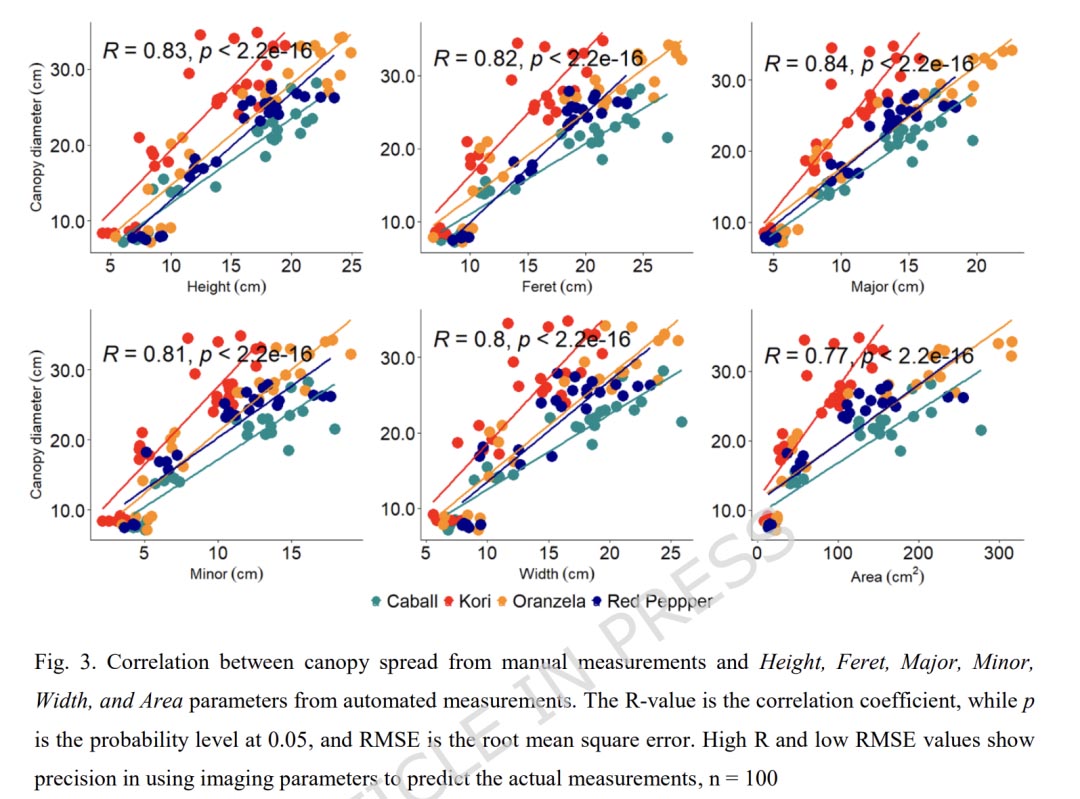
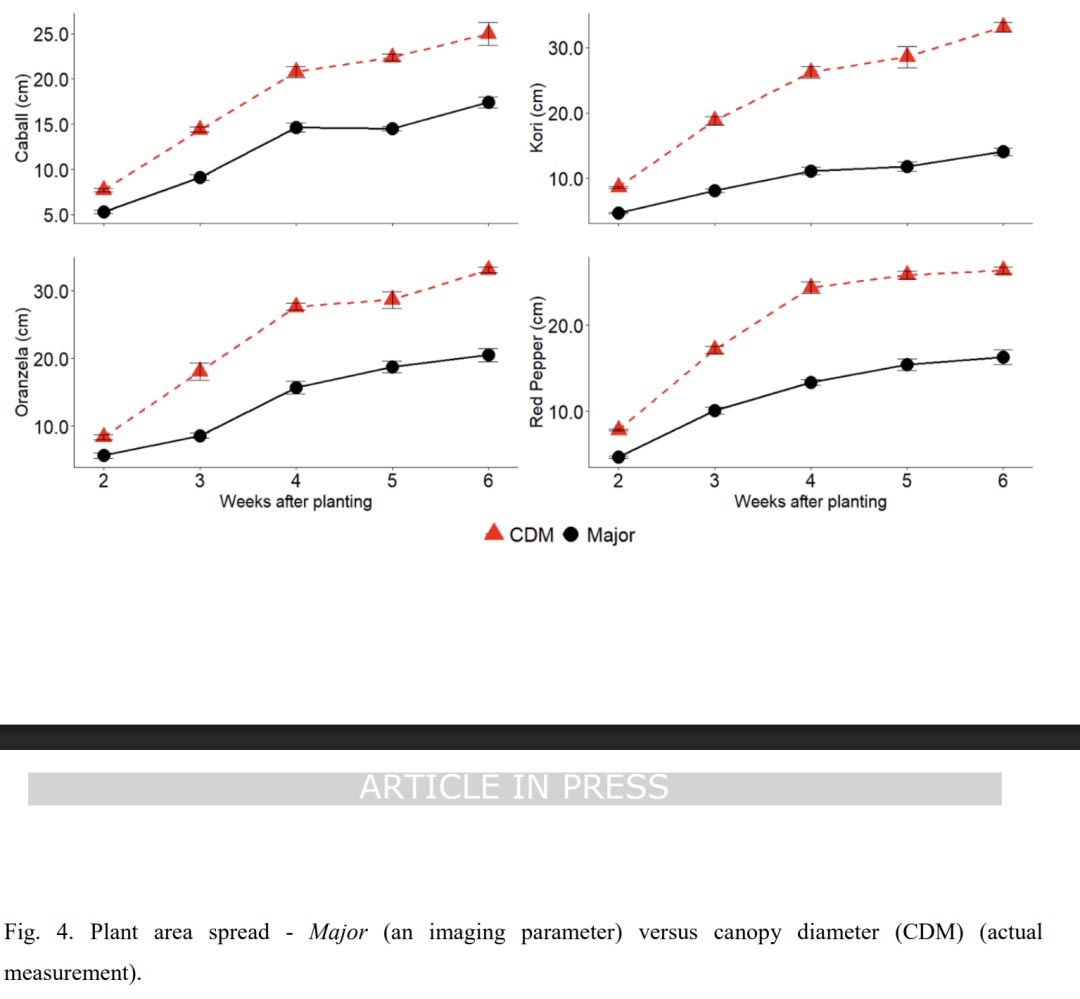
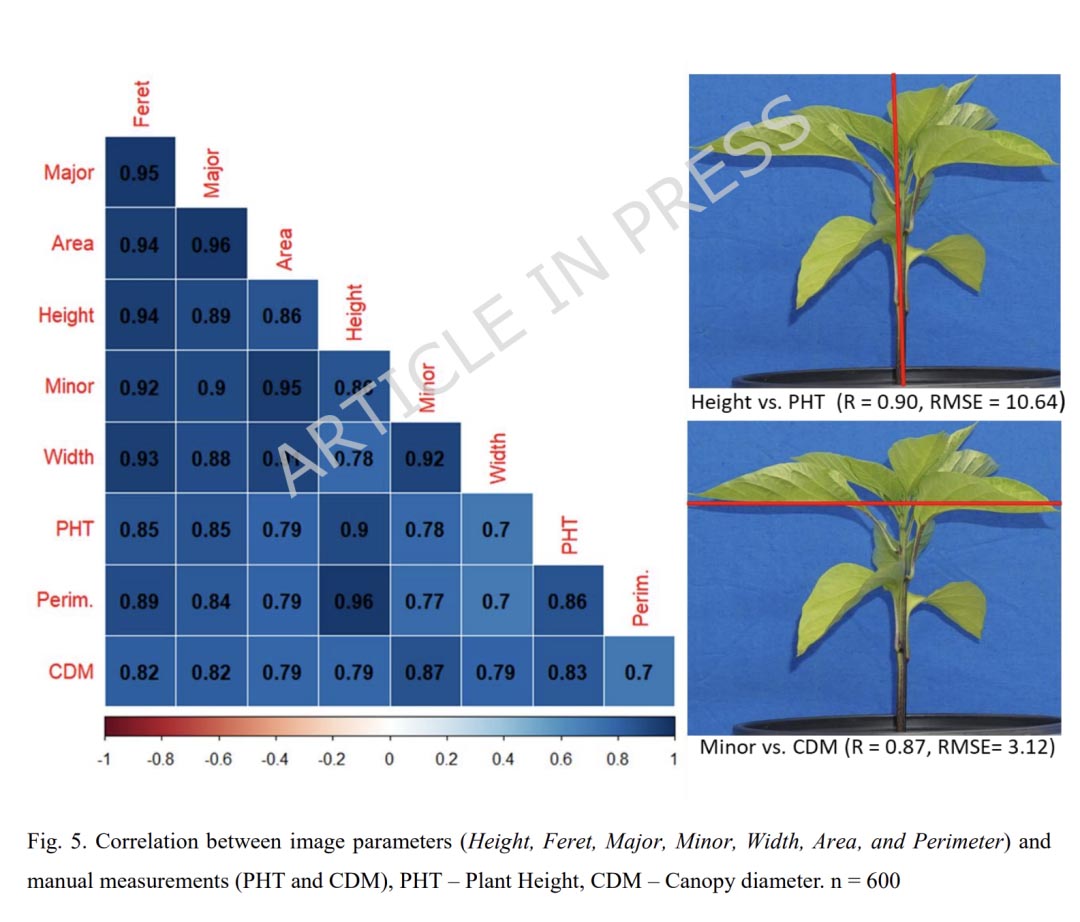
The results indicated that during the vegetative stage, the “Major” parameter (the longest line that can be drawn within the leaf area) in top-view imaging showed the highest correlation with manually measured canopy diameter (r = 0.84), while the “Height” parameter in side-view imaging correlated strongly (r = 0.90) with actual plant height. The optimal camera-to-object distance for side-view imaging was 0.8 m; at this distance, the measurement accuracy for plant height and canopy width across all genotypes was superior to that observed at 1.0 m or 1.2 m. Imaging accuracy declined as the plants grew, suggesting a need to dynamically adjust imaging parameters based on the developmental stage.
Regarding leaf phenotyping, short-range imaging at 0.55 m and 0.65 m yielded the best results; the correlation coefficient between leaf length and the “Height,” “Feret,” and “Major” parameters reached 0.95, while the correlation between leaf area and the “Feret” and “Major” parameters was 0.86. The optimal imaging distance for fruit phenotyping was found to be 0.55–0.65 m; specifically, the correlation coefficient between fruit length and the Feret parameter reached 0.87 at 0.65 m, while the correlation between fruit diameter and the Minor parameter reached 0.90 at 0.55 m. Furthermore, the correlation coefficients between fresh/dry fruit weights and image area were as high as 0.94 and 0.89, respectively. Seed phenotype analysis revealed significant differences among genotypes regarding parameters such as roundness, compactness, and aspect ratio at a distance of 0.65 m, enabling effective differentiation of germplasm resources.
In summary, this study systematically evaluated, for the first time, the impact of camera-to-object distance on the accuracy of RGB imaging for chili peppers. It established that the optimal imaging distance is 0.8 m for the vegetative growth stage and 0.55–0.65 m for reproductive organs (leaves, fruits, and seeds). This research provides a standardized imaging protocol for high-throughput phenotyping of chili peppers, helping to minimize manual measurement errors and accelerate the breeding selection process; it holds significant value for advancing precision breeding and digital agriculture in chili pepper production.