
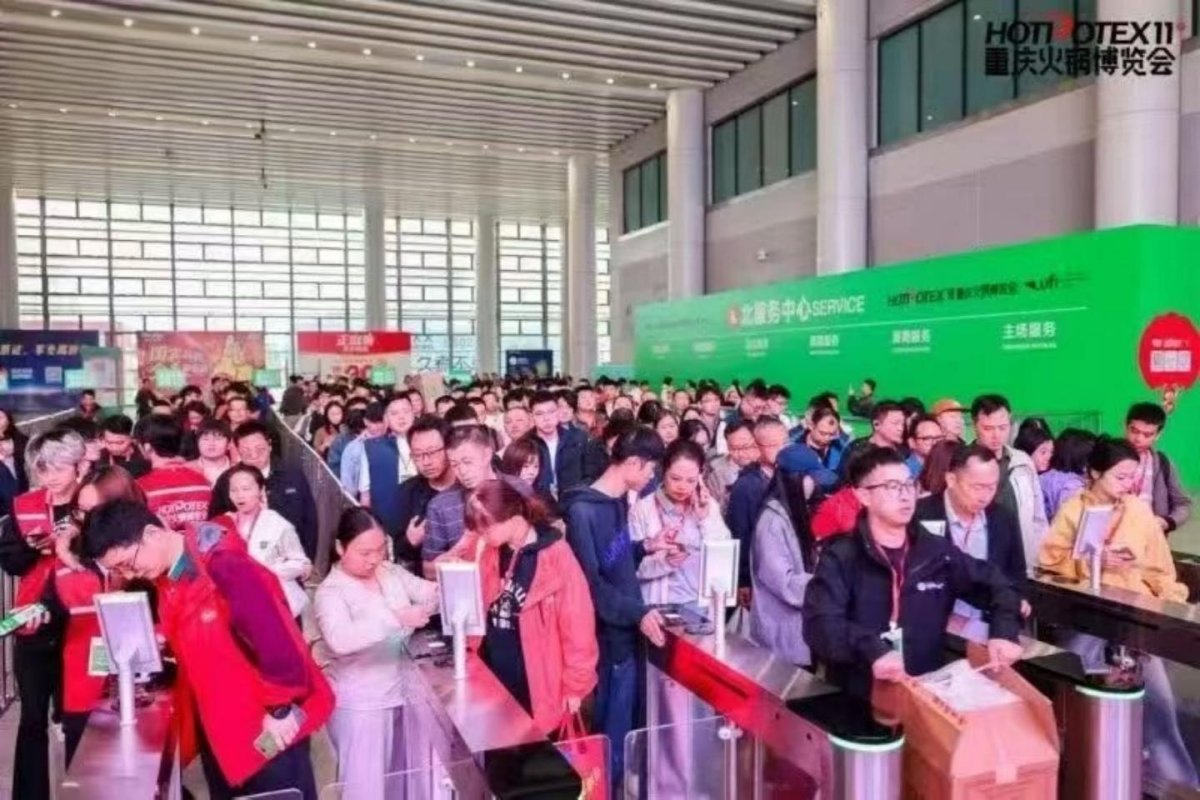
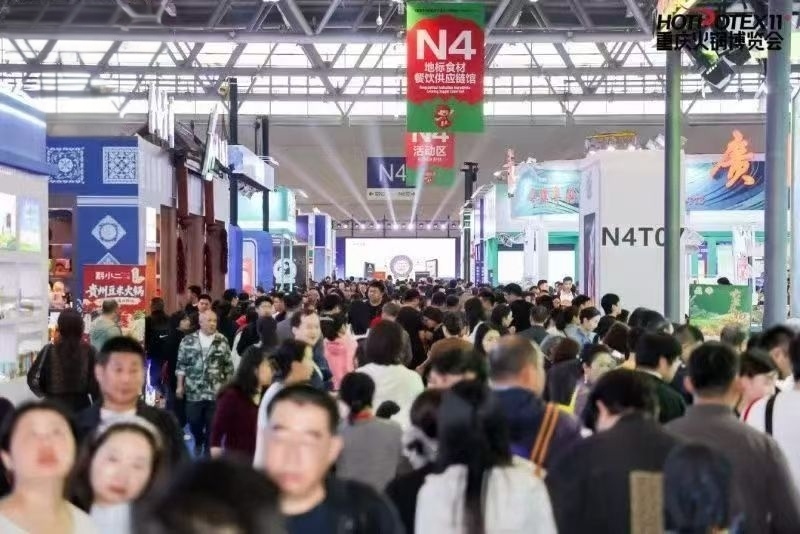
Figure 1: Exhibition Site
Just returned from the Chongqing Hotpot Festival, and the heat has yet to dissipate.
Many people think that the main focus of the Hotpot Festival is “spiciness”—who is spicier, whose aroma is stronger, whose broth is more memorable. But after actually walking into the exhibition hall, sitting down, and having in-depth conversations with dozens of hotpot base manufacturers, seasoning brands, and catering supply chain partners, you notice a very interesting shift: the topic people talk about most is no longer “spicy or not,” but rather “stability.”
Can the spiciness remain consistent? Can the supply be stable? Can the costs be optimized?
These three questions act like three measuring sticks, gauging the underlying transformation quietly taking place in the entire hotpot seasoning industry—from “flavor competition” toward “supply chain competition.”
I. From ‘Is it spicy enough?’ to ‘Is it stable?’: The industry is changing its examination questions
Walking around the exhibition, you will find that almost every base seasoning manufacturer claims, ‘Our base seasoning is spicy enough.’ Spiciness has become an entry ticket, not a differentiating factor. What truly makes buyers and brand representatives sit down for a serious discussion are three other aspects.
The first point is spiciness stability. A research and development director from a chain hotpot brand put it bluntly: ‘I’m not afraid of the spiciness; I’m afraid that it’s spicy today but not spicy tomorrow.’ What chain restaurants fear most is flavor fluctuation — consumers remember ‘the taste of this restaurant,’ not ‘the taste of this batch of ingredients.’ If the spiciness of a batch of chili peppers varies by 20%, the overall flavor of the soup base will be off, leading to customer complaints at the stores.
The second point is year-round supply stability. Fresh chili peppers have seasonality, and dried chili peppers are affected by climate fluctuations in their production regions, leading to price increases, stockouts, and inconsistent quality — these are longstanding pain points in the hotpot industry. A client operating a nationwide chain once calculated the costs for us: temporary ingredient substitutions, recipe adjustments, and staff training caused by chili supply shortages end up costing far more in a year than the purchase price of the chili itself. ‘Continuous supply’ is more valuable than ‘cheaper.’
The third point is cost structure optimization. This does not mean simply squeezing prices, but rather optimizing costs by using a more efficient ingredient structure without reducing quality. For example, using high-spiciness chili peppers to replace ordinary ones — requiring less quantity, offering more precise spiciness, and ultimately lowering overall costs. This is also the essential difference between industrial chilies and culinary chilies: industrial chilies are calculated based on ‘cost per unit of spiciness,’ not ‘price per kilogram.’
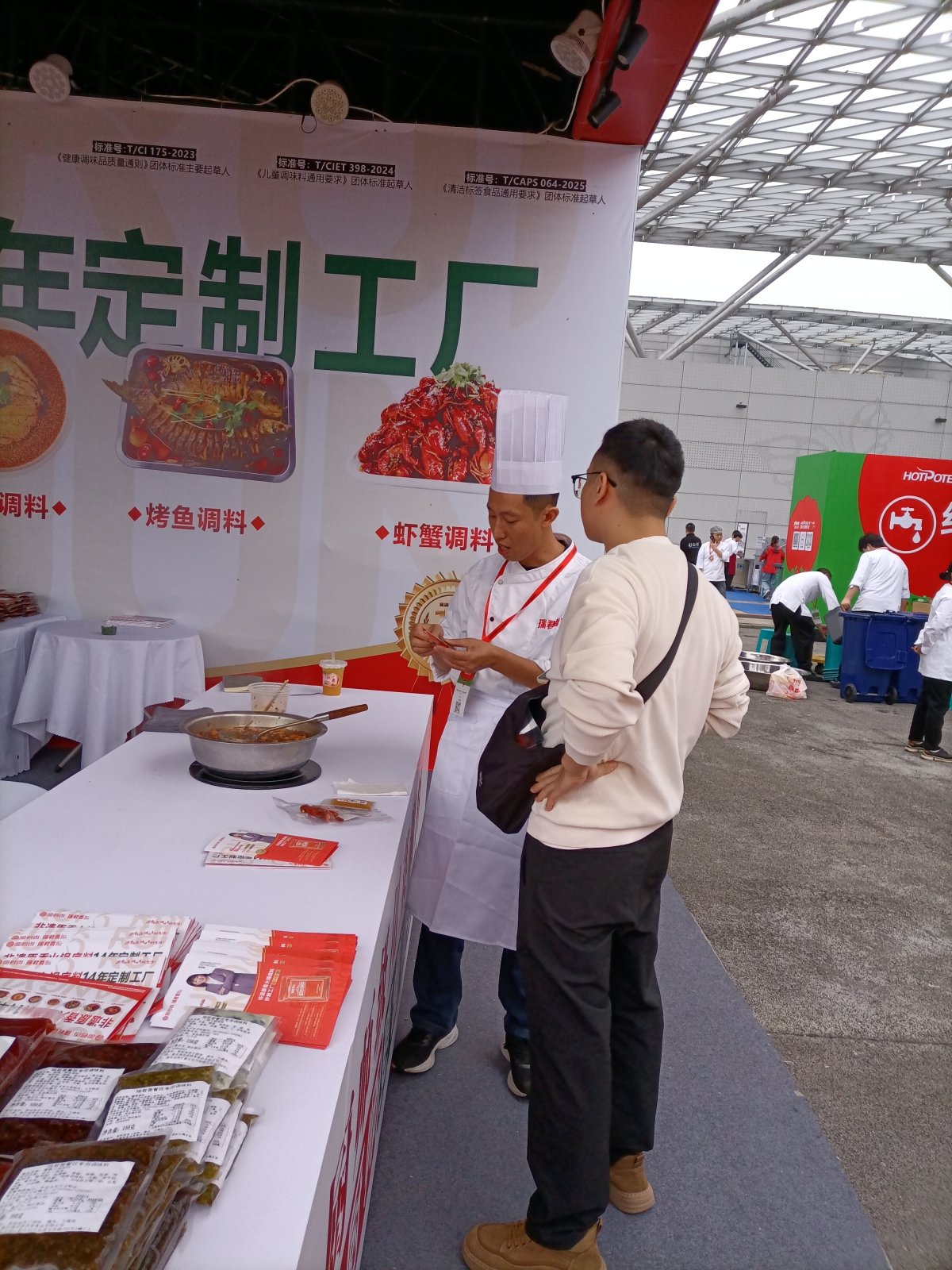
Figure 2: Booth Interaction Scene
II. Industrial Chili: Why Is This the Answer?
Many people, the first time they hear the term “industrial chili,” might wonder whether it is chemically synthesized or unnatural. On the contrary, industrial chili uses agricultural breeding and industrial extraction methods to standardize and stabilize the capsaicin content in chili peppers, transforming “spiciness” from a vague sensory experience of an agricultural product into a quantifiable, reproducible, and traceable industrial raw material.
This is exactly what Jindao Capsaicin Technology does. We have established 200,000 acres of core planting bases in Yunnan, Guangxi, and Hainan, using the “Jindao No. 1” industrial chili (Devil Shuan Shuan Chili), developed by Professor Xu Huashun’s team over many years of dedicated breeding, as the core variety. We maintain full-chain self-control from seed to extraction.
– Stable spiciness: consistently over 1 million SHU, with batch quality inspection reports, and spiciness deviation controlled at industry-leading levels;
– Stable supply: complete product matrix including fresh chili, dried chili, chili powder, chili oil resin, and capsaicin, ensuring continuous supply 365 days a year;
– Cost efficiency: higher spiciness means higher utilization, and when calculated by “cost per unit spiciness,” more than 30% savings compared to traditional procurement models.
At an expo, an old factory manager who had been in the hotpot seasoning business for twenty years tried our chili oil resin sample after returning and said something that left a deep impression on me: “You are not selling chili; you are selling ‘certainty.'”
Indeed, certainty. This is the core value that industrial chili provides to B-end clients—transforming agricultural products that are dependent on the weather into industrial raw materials that can be delivered on demand.
III. The Next Decade for the Hotpot Industry Will Be a Battle of Supply Chain Fundamentals
One strong impression from this Chongqing Hotpot Festival is that the industry is moving from “rough growth” to “meticulous cultivation.”
In the past ten years, the hotpot industry competed on how fast they could open stores, brand marketing, and product innovation. In the next ten years, when the number of stores reaches saturation and consumers become more savvy, the real differentiator will be backend supply chain capabilities—whether the ingredients are stable, costs can be controlled, and quality can be standardized and replicated.
Industrial chili is one of the most critical links in this supply chain.
In hotpot base sauces, chili is one of the ingredients with the highest cost proportion and also the variable with the most flavor fluctuation. If you can lock down this variable, the stability of the base sauce jumps to a whole new level; once the base sauce is stable, chain expansion becomes much more confident; and with the confidence to expand, a brand can truly go national.
That’s why almost all the top base sauce manufacturers and chain brands we met at this exhibition were actively asking, “How do you control the spiciness?” “What’s your production capacity?” “How long can you guarantee supply?”—everyone has shifted from looking for cheaper chili to looking for more reliable supply chain partners.
IV. Welcome to Consult, Not Just Talk About Chili
Returning from Chongqing, the greatest impression was not “how many samples we sold,” but rather “we have found the right direction.”
When the entire industry is asking “Is it stable?”, every penny spent and every night endured by Jindao Spicy Technology in breeding, planting, extraction, and quality control over the past few years is starting to resonate.
We are not just a company that sells chili; we are a company providing standardized spicy solutions. Our clients include hot pot seasoning manufacturers, condiment brands, and restaurant supply chains—all B2B customers who require “consistent spiciness.”
If you are troubled by fluctuations in spiciness, anxious about seasonal shortages, or concerned about cost optimization, we welcome you to come talk to us. It does not have to be business; making a friend and sharing insights is also one of the most valuable gains of the Hot Pot Festival.
After all, in the pot of hot pot, what is being cooked is not only chili but also the future of the entire industry.