
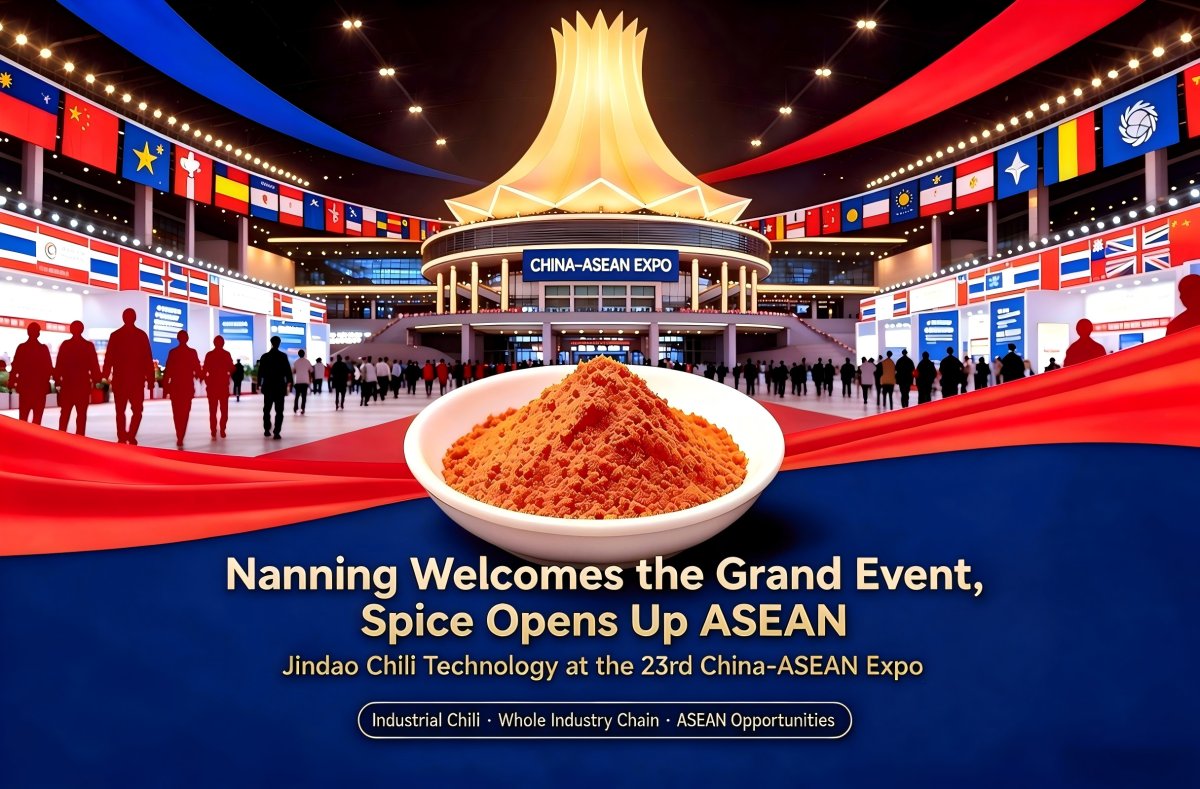
From September 17 to 21, the 23rd China‑ASEAN Expo grandly opened in Nanning, Guangxi. Under the theme of “Sharing 3.0 Opportunities, Creating a Better Life Together”, the expo covered a total exhibition area of 170,000 square meters with over 3,400 participating enterprises. For the first time after its expansion, all 11 ASEAN nations gathered in Nanning, marking a historic “full‑family reunion”. Jindao Capsaicin Technology (Guangxi) Co., Ltd. showcased its full range of high‑spiciness products at the event. Positioned as a professional source supplier of standardized spiciness, the company demonstrated the robust strength of China’s industrial‑grade chili industry to the world.
Chapter 1 Appointment in Yongcheng: A Chili on a National‑Level Stage
In the golden autumn of September, Nanning (Yongcheng) once again draws global attention.
Beneath the hibiscus‑flower‑shaped hall of Nanning International Convention and Exhibition Center, crowds of merchants throng the venue. More than 3,400 enterprises from over 70 countries and regions gathered here to negotiate cooperation and pursue common development across the five‑day exhibition. This marks the 23rd edition of the China‑ASEAN Expo. It is also a pivotal year celebrating the 5th anniversary of the China‑ASEAN Comprehensive Strategic Partnership and the accelerated implementation of the upgraded Protocol for the China‑ASEAN Free Trade Area 3.0.
Within the International Agricultural Cooperation Exhibition Area, the striking “Jindao Red” caught the eyes of numerous domestic and overseas business visitors. At the booth of Jindao Capsaicin Technology (Guangxi) Co., Ltd., a constant stream of inquiring guests gathered. Food manufacturers from Thailand, condiment distributors from Vietnam, pharmaceutical procurement agents from Malaysia, and deep‑processing chili enterprises from Indonesia crowded around the chili samples on display, observing closely and frequently giving thumbs‑up.
“This is really fiery spiciness!” remarked a representative from a food enterprise in Bangkok, Thailand after sampling the product, speaking halting Chinese. “We have long searched for such stable high‑heat raw materials, and at last we have found them.”
Scenes like this unfolded daily at Jindao Capsaicin’s booth.
Why has a chili from Guangxi, China drawn such intense attention at the ASEAN Expo? The answer lies in Jindao Capsaicin Technology’s years of persistent dedication, in the tides of upgrading the China‑ASEAN Free Trade Area 3.0, and in the unique geographical advantage of Guangxi acting as a bridgehead.
Chapter 2 Why Choose Guangxi?
Guangxi shares land borders with ASEAN nations, serving as China’s frontier and gateway for opening‑up and cooperation with ASEAN.
The year 2026 stands as a milestone for Guangxi. The Pinglu Canal, a landmark mega‑project, was completed and opened to navigation. It connects the Xijiang shipping trunk line directly with Beibu Gulf Port, thoroughly reshaping the logistics network linking China’s southwest hinterland with ASEAN via the Beibu Gulf. “The Pinglu Canal links rivers and seas southward, greatly elevating regional cooperation capacity between China and ASEAN; northward it connects with Eurasia, linking China‑ASEAN cooperation with countries along the Belt and Road,” commented Lu Xinning, Member of the Standing Committee of CPC Guangxi Zhuang Autonomous Region Committee and Vice‑Chairperson of Guangxi Zhuang Autonomous Region.
For Jindao Capsaicin Technology, rooting operations in Guangxi and targeting ASEAN markets is no accident.
Four Core Advantages of Guangxi for Overseas Expansion
| Advantage Dimension | Core Conditions | Value for Chili Industry |
|---|---|---|
| Production‑Origin Advantage | Youjiang River Valley in Baise, Guangxi. Sub‑tropical monsoon climate with ample sunshine, abundant heat, large diurnal temperature differences, karst landforms and red soil. | Produces chilies with rich flavor and stable pungency; a prime growing region for premium‑quality Chinese chilies. |
| Geographical Location Advantage | Land border with Vietnam; access via Beibu Gulf ports to Thailand, Malaysia, Indonesia and other ASEAN countries. Complemented by the New Western Land‑Sea Corridor, Pinglu Canal and Beibu Gulf Port river‑sea combined transport system. | Dried chilies, chili powder and chili oleoresin shipped from Guangxi reach major ASEAN ports within 3‑7 days, substantially cutting logistics costs. |
| Market Advantage | Deep‑rooted chili‑eating traditions across ASEAN and a huge condiment market. Bilateral trade volume between China and ASEAN hit USD 744.41 billion from January to July 2026, a year‑on‑year increase of 24.7%. | Surging demand for high‑pungency chili raw materials, especially fast‑growing demand for deep‑processed chili products. |
| Policy Advantage | The Free Trade Area 3.0 incorporates digital economy, green economy and industrial‑supply‑chain interconnectivity, shifting focus from tariff reduction toward rule‑based coordination. | More convenient customs clearance, transparent trade rules and expanded market space bringing direct benefits to agricultural enterprises. |
Analysis Insight: Guangxi’s core value stems from its “bridgehead effect”. The combined strengths of favorable production conditions, strategic geography, huge market potential and supportive policies allow Jindao Capsaicin to guarantee raw‑material quality relying on Baise’s prime growing zones while rapidly accessing ASEAN markets through Beibu Gulf port clusters. It represents the optimal geographical choice for Chinese industrial‑grade chilies to go global.
It is against this backdrop that Jindao Capsaicin Technology (Guangxi) Co., Ltd. was founded. Taking Guangxi as its home base and prioritizing ASEAN markets, the enterprise aims to build a “Guangxi model” for Chinese industrial‑grade chili global expansion.
Chapter 3 Full‑Product Matrix: Six Value Realizations of One Chili
At this ASEAN Expo, Jindao Capsaicin Technology presented a complete product portfolio covering every link of the chili industrial chain, ranging from primary agricultural commodities to high‑value deep‑processed goods.
Comparison Table for Six Major Product Lines
| Product Line | Pungency / Specifications | Key Application Sectors | Industry Pain Points Addressed |
|---|---|---|---|
| Extra‑Spicy Fresh Chili Sauce | Raw material: Jindao No.1 fresh chili | Catering chains, snack foods, ready‑to‑use seasonings | Loss of fresh‑chili aroma; inconsistent pungency in seasoning sauces |
| High‑Spiciness Dried Chili | Low‑temperature drying process; shelf‑life: 12‑24 months | Condiment production, food processing, industrial extraction | Short shelf‑life for fresh chilies; high transport loss rate (20‑30%); seasonal supply gaps (November‑June) |
| High‑Spiciness Chili Powder | Fine grinding (60‑80 mesh); stable over 1,000,000 SHU | Instant noodles, snack foods, hot‑pot base materials, compound seasonings | Uneven pungency, slow dissolution and large batch‑to‑batch variations |
| Natural Chili Oleoresin | 30‑60% crude paste / dilutable to 1‑1%; customizable 150,000‑1,500,000 SHU | Foods, pharmaceuticals, daily‑use chemicals, military industry | Insufficient raw‑material pungency, high extraction costs and unstable quality |
| Chili Red Pigment | Bright saturated red color; formulated for oil‑based food applications | Oil‑rich food, condiments, daily‑chemical coloring | Pigment stratification & precipitation, unstable color value and residual spicy taste |
| 99.99% High‑Purity Capsaicin | 99.99% purity; one of few domestic enterprises with mass‑production capacity | Analgesic pharmaceuticals, weight‑loss health supplements, agricultural pest repellents, riot‑control military supplies | High technical barriers for high‑purity extraction and difficulties in mass‑scale manufacturing |
Analysis Insight: One single chili realizes its full value, spanning primary processing to deep refinement and covering food, pharmaceutical and other sectors. This is why Jindao Capsaicin Technology drew heavy attention at the expo. Whether you are a condiment producer, health‑product developer, pharmaceutical manufacturer or daily‑chemical enterprise, you can source your required spicy‑ingredient solutions here. The comprehensive product portfolio constitutes Jindao’s core competitive moat and sets it apart from ordinary chili traders.
Chapter 4 Three Major Client Cases: Gold Seal of Proven Capability
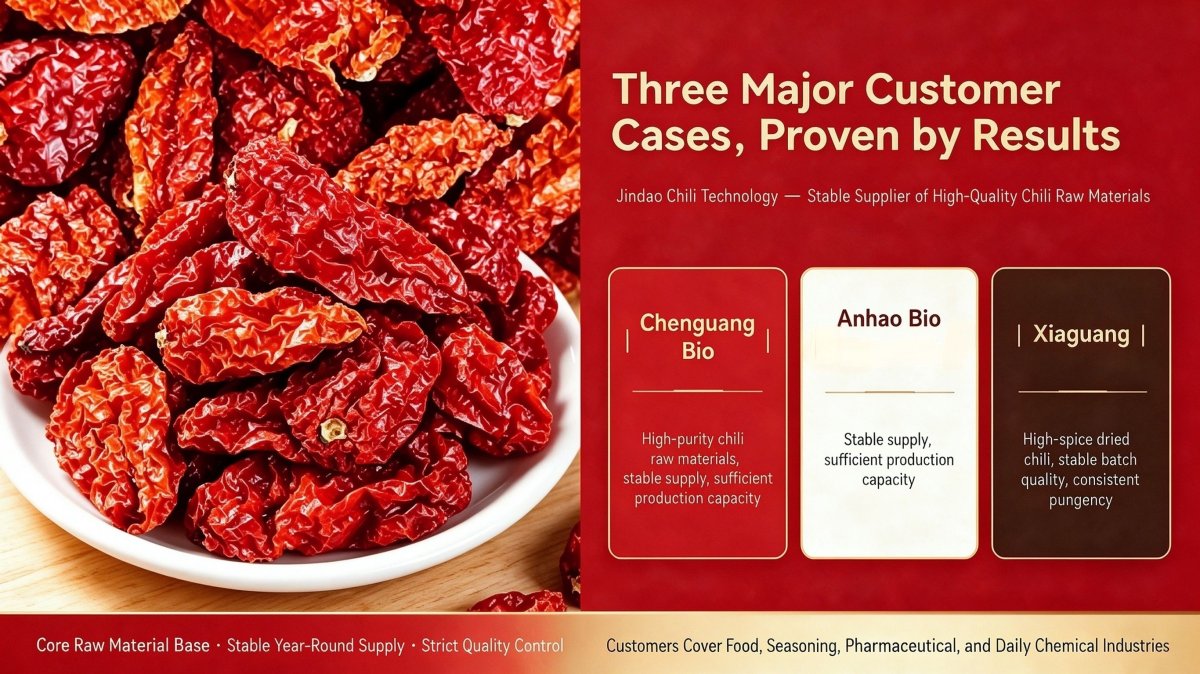
“Cooperation with these three leading enterprises proves Jindao’s chili raw materials have passed the strictest tests for quality, stability and supply capacity,” commented a Malaysian procurement agent after reviewing the case display at the booth. “We will arrange sample testing promptly upon returning home and hope to reach cooperation.”
Beyond these benchmark clients, Jindao Capsaicin Technology serves hundreds of food, condiment, pharmaceutical and daily‑chemical enterprises nationwide. “200,000 mu of core planting bases and stable year‑round supply” is not a slogan but a commitment delivered day‑by‑day.
Chapter 5 Four Major ASEAN Industry Pain Points: Chinese Solutions from Jindao
During communications throughout the expo, Jindao Capsaicin’s team identified that while ASEAN purchasers face pain points similar to domestic counterparts, regional specific challenges also exist. Four core challenges are summarized as below:
| Pain Point | Current ASEAN Industry Status | Jindao Solutions |
|---|---|---|
| High fresh‑fruit loss & unstable supply chains | Abundant local chili output dominated by fresh produce; short shelf‑life, high transit losses; supply‑chain disruptions caused by extreme weather or pests. | High‑spiciness dried chili & chili powder. Long shelf‑life (12‑24 months); stable supply 365 days a year unaffected by seasons or weather conditions. |
| Erratic pungency & difficult quality control | Diverse local chili varieties with wide pungency swings; food manufacturers struggle for consistent product taste. | Standardized spiciness system: consistently above 1,000,000 SHU with minimal batch deviation. “Ready‑to‑use, worry‑free performance upon adoption.” |
| Insufficient deep‑processing capacity & low added value | Industry stuck in raw‑material sales; weak deep‑processing technology leading to low product added value. | Full‑range product‑matrix output: from dried chilies and chili powder to chili oleoresin and high‑purity capsaicin, enabling clients to directly obtain high‑value finished materials. |
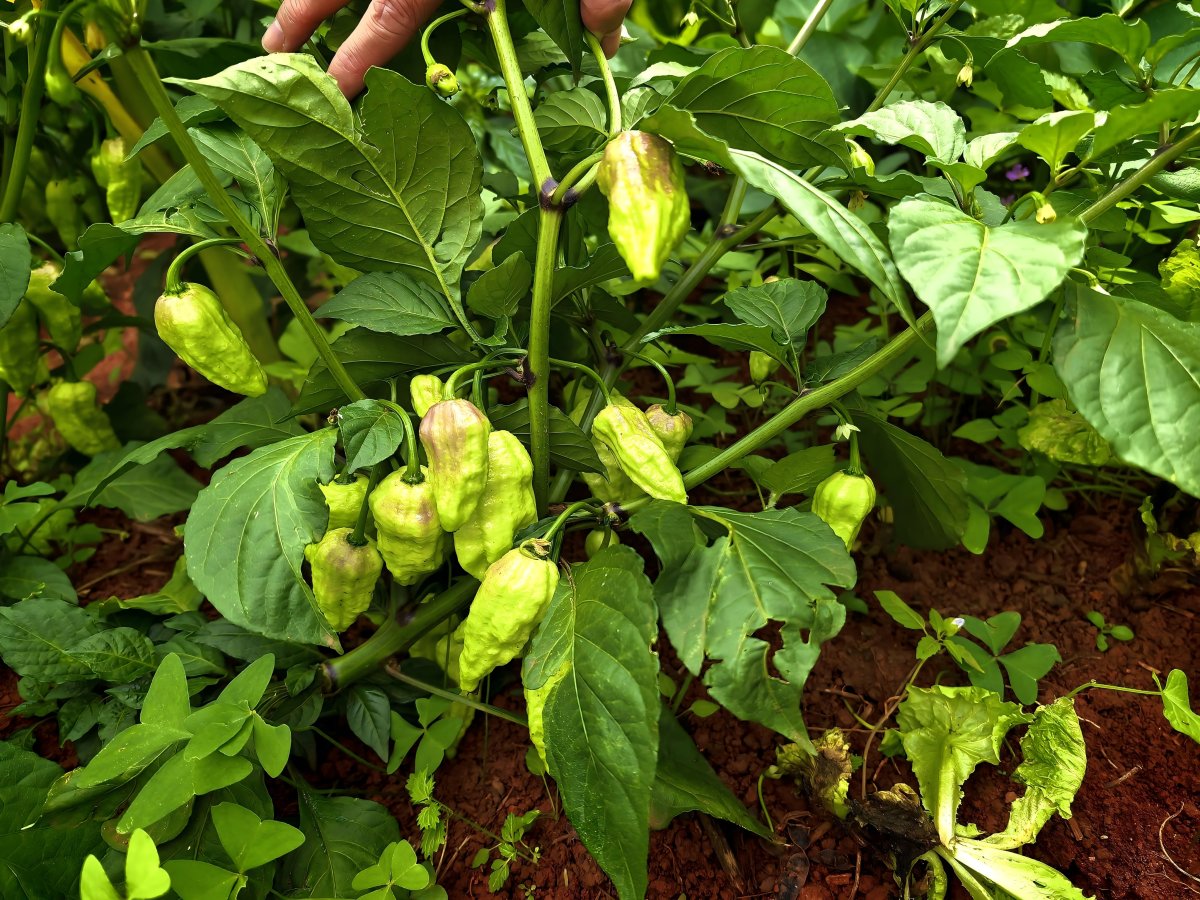
| Lack of premium varieties & low planting profitability | Aging varieties with low yields and poor disease resistance, resulting in low incomes for growers. | Variety plus technology transfer. Jindao No.1 cultivar, 26‑year breeding achievement by Professor Xu Huashun, delivers high yields, strong disease resistance and high pungency, paired with standardized cultivation guidance. |
Analysis Insight: These four pain points and corresponding solutions precisely address core demands of ASEAN’s chili sector. Across the five‑day exhibition, Jindao’s booth received over 500 merchant visits, more than 40% from ASEAN nations, yielding over 30 preliminary cooperation intentions — hard data speaks for itself.
Chapter 6 The FTA 3.0 Era: Jindao’s ASEAN Strategic Roadmap
The expo theme reads “Sharing 3.0 Opportunities, Creating a Better Life Together”. What do “3.0 opportunities” mean for Jindao Capsaicin Technology?
Four Major Opportunities Brought by FTA 3.0
| Opportunity Dimension | New Policies of FTA 3.0 | Business Opportunities for Jindao |
|---|---|---|
| Trade Facilitation | Further tariff‑barrier reduction, streamlined customs procedures and enhanced trade convenience. | Chilies and deep‑processed derivatives benefit directly from tariff cuts and simplified customs clearance, lowering export costs. |
| Industrial‑Chain Synergy | Industrial‑supply‑chain interconnectivity formally institutionalized; transition from simple goods trading toward deep industrial‑chain integration. | “Chinese technology + ASEAN resources + global market”: leverage domestic strengths in breeding and deep‑processing technologies while tapping ASEAN land, labor and market resources. |
| Green Economy | Green‑economy cooperation prioritized to advance sustainable agriculture and green trade. | Jindao No.1 industrial chili features high added value and low environmental footprint: high yield, low fertilizer input, drought and barren‑soil tolerance, aligning with green‑development concepts. |
| Digital Economy | Digital‑economy cooperation included in the framework to foster cross‑border e‑commerce and digital‑trade new‑form business models. | Build Jindao brand awareness and popularize products among ASEAN consumers via cross‑border e‑commerce channels. |
Jindao’s Three‑Step ASEAN Strategy
| Phase | Core Actions | Objectives |
|---|---|---|
| Step 1: Product Sales | Penetrate ASEAN markets with flagship products: dried chilies, chili powder and chili oleoresin. | Build brand recognition, accumulate client resources and establish trade channels. |
| Step 2: Technology Licensing | Export seed varieties, planting techniques and deep‑processing technologies to upgrade local ASEAN industrial capacity. | Evolve from pure supplier to technical‑cooperation partner, forging deep‑rooted client bonds. |
| Step3: Ecosystem Building | Construct a full‑industrial‑chain ecosystem covering breeding, cultivation, processing, trade and branding. | Evolve into a core hub enterprise for China‑ASEAN chili‑industry collaboration. |
Analysis Insight: Jindao Capsaicin’s three‑phase ASEAN strategy mirrors China‑ASEAN cooperation’s evolutionary path: from commodity trade to industrial symbiosis and ultimately ecosystem co‑construction. This is no coincidence, but a forward‑thinking agricultural‑tech enterprise accurately capturing the pulse of our times.
Epilogue The Mission of a Chili: Let the World Embrace Chinese Spiciness
Standing in the exhibition hall of Nanning International Convention and Exhibition Center, watching continuous flows of ASEAN business visitors, Jindao Capsaicin Technology’s team reflects with deep feeling.
Thanks to Professor Xu Huashun’s decades‑long devotion to chili breeding, small seeds have grown into an industrial landscape covering 200,000 mu of planting bases, diversified product lines and hundreds of enterprise clients. Now, on the stage of the China‑ASEAN Expo, Jindao Capsaicin Technology showcases the solid capabilities of China’s industrial‑grade chili industry to the 11 ASEAN nations and to the whole world.
This marks not only one chili’s global journey, but also the growth story of a Chinese agricultural‑tech enterprise.
From Wuyi in Fujian to Baise in Guangxi, from Southwest China to ASEAN nations, every step Jindao Capsaicin takes keeps pace with the times. Accelerated development of the New Western Land‑Sea Corridor, opening of the Pinglu Canal and implementation of the China‑ASEAN Free Trade Area 3.0 have laid solid groundwork for Jindao’s overseas‑going journey.
Yet Jindao’s team understands clearly: opportunities favor the prepared mind. Years of breeding R&D, core competitiveness built on “standardized spiciness”, and full‑industrial‑chain deployment are essential prerequisites to seize such favorable external conditions.
Positioned as “source supplier for standardized spiciness”, this also represents Jindao’s original aspiration. No matter how markets shift or technologies iterate, specialization, refinement and thorough mastery of “spiciness” remain our core competitive strength.
The 23rd China‑ASEAN Expo has concluded, yet Jindao Capsaicin Technology’s ASEAN journey has only just begun.
Moving forward, rooted firmly in Guangxi and oriented toward ASEAN markets, guided by its mission “Let the World Embrace Chinese Spiciness”, Jindao Capsaicin Technology will deliver more premium Chinese chili products to ASEAN consumers, share advanced chili‑planting and processing technologies with ASEAN partners, and compose brilliant chapters for China‑ASEAN agricultural‑cooperation.
How fiery can one chili be?
Jindao Capsaicin Technology answers this question through years of persistent work: Its spiciness means far more than a burning sensation on the tongue; It embodies resolve and conviction of a Chinese agricultural‑tech enterprise going global.
From Baise to ASEAN, from China to the world — Jindao Capsaicin is pressing forward.