
Plants in natural environments often face multiple stresses, such as high temperatures and pathogen attacks. However, because resources are limited, they must make trade-offs between growth and defense. The molecular mechanisms underlying this balance have long been a frontier challenge in plant biology.
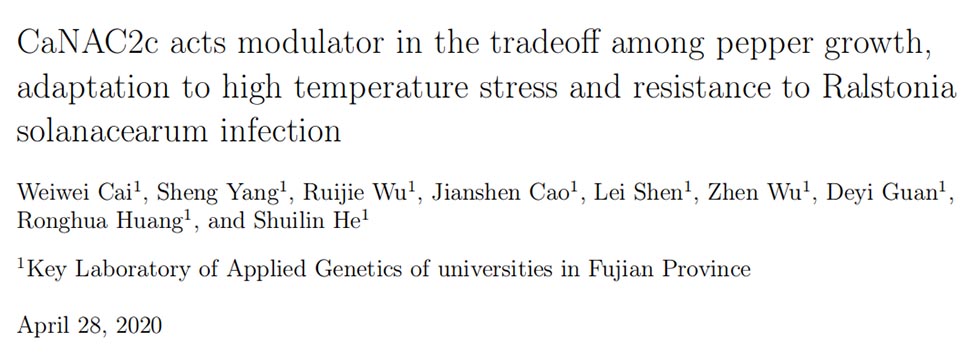
Recently, a research team from the Key Laboratory of Applied Genetics of Fujian Provincial Universities systematically characterized the function of the pepper NAC transcription factor family member CaNAC2c using reverse genetics and molecular physiology approaches. The study revealed that CaNAC2c acts as a molecular switch that coordinates the complex trade-off among plant growth, thermotolerance, and resistance to bacterial wilt through both transcriptional regulation and post-translational modification. The research, titled “CaNAC2c-mediated trade-off between growth and thermotolerance/immunity in pepper,” was published on a preprint platform.
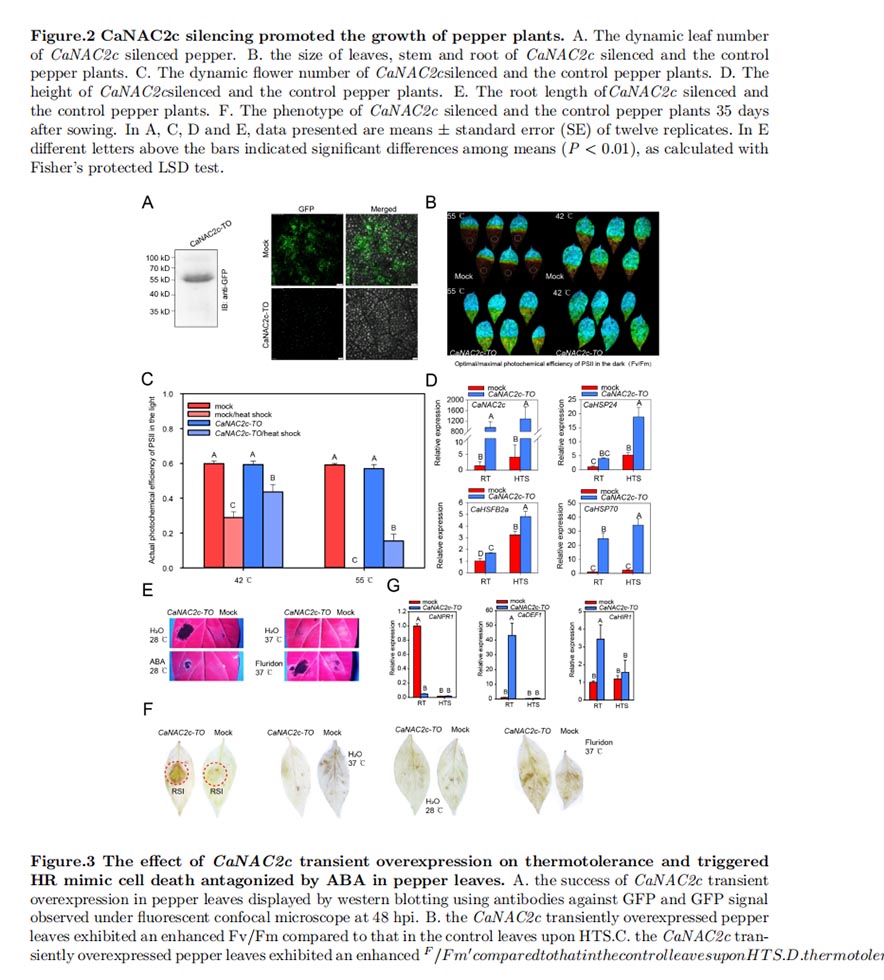
The researchers found that, under non-stress conditions, the transcription level of CaNAC2c is extremely low, and the gene negatively regulates pepper plant growth. Virus-induced gene silencing (VIGS) experiments showed that silencing CaNAC2c significantly increased leaf, stem, and root growth, while also increasing leaf number and flower number. In contrast, heterologous overexpression of CaNAC2c in Nicotiana benthamiana resulted in dwarf plants and delayed growth. These findings indicate that CaNAC2c functions as a growth suppressor, and its low expression level is essential for maintaining normal plant development.
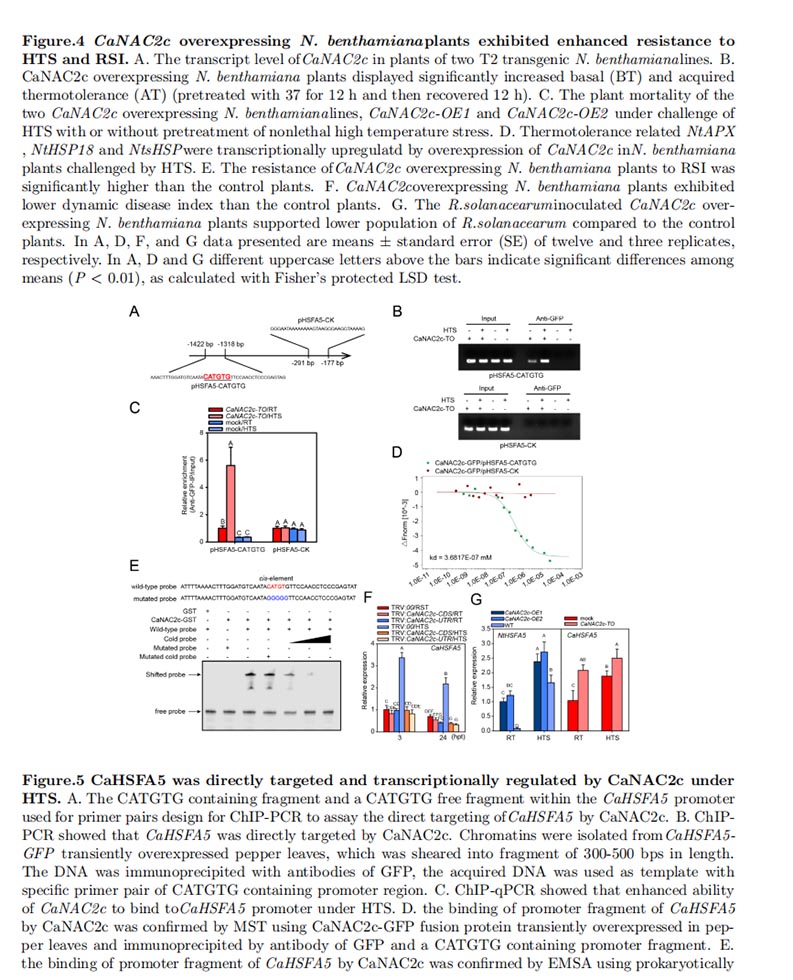
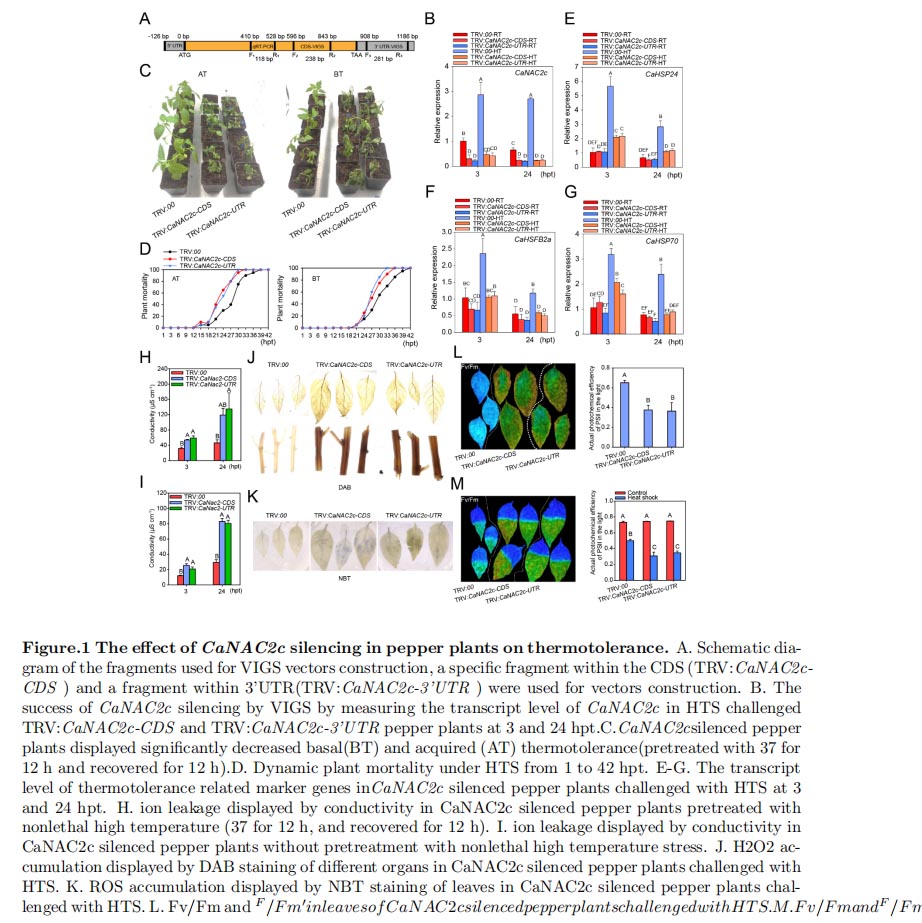
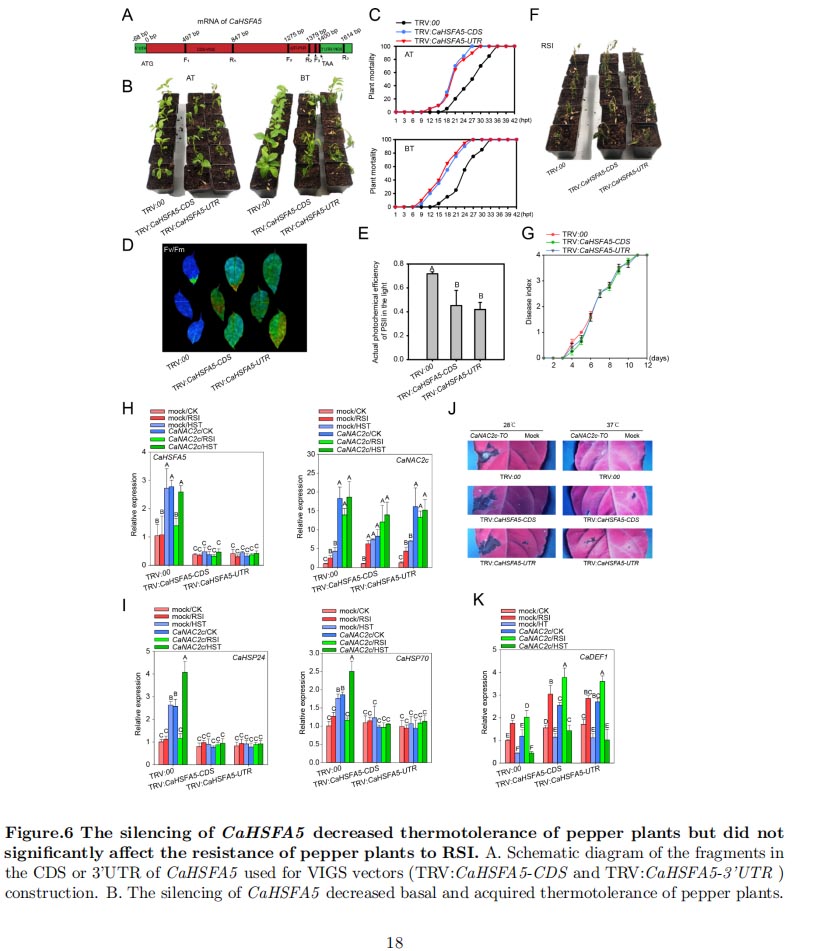
Under heat stress at 42°C, CaNAC2c is rapidly induced and directly binds to the CATGTG core motif in the promoter of its downstream target gene, CaHSFA5, thereby activating its transcription. ChIP-PCR, electrophoretic mobility shift assays, and microscale thermophoresis all confirmed this specific interaction. Activated CaHSFA5 further upregulates heat shock protein genes, including CaHSP24 and CaHSP70, while reducing the accumulation of H₂O₂ and reactive oxygen species (ROS). As a result, both basal thermotolerance and acquired thermotolerance are significantly enhanced. Silencing either CaNAC2c or CaHSFA5 reduced heat tolerance, whereas overexpression improved thermotolerance.
However, silencing CaNAC2c alone did not significantly affect pepper resistance to bacterial wilt. When CaNAC2c and its homologous gene CaNAC2d were simultaneously silenced, disease resistance declined markedly and the disease index increased significantly, indicating that the two genes have functionally redundant roles in immune regulation.
During pathogen infection, CaNAC2c enhances the expression of jasmonic acid (JA) signaling pathway genes, such as CaDEF1, and promotes H₂O₂ accumulation, while suppressing salicylic acid (SA) signaling pathway genes. This regulatory pattern is completely different from its response under heat stress. Importantly, CaNAC2c does not target CaHSFA5 during pathogen infection, demonstrating that its downstream target genes are highly stress-specific.
The study also identified an interesting “switching” phenomenon. Transient overexpression of CaNAC2c triggers hypersensitive response-like (HR-like) cell death under normal temperatures. However, this cell death response is completely suppressed by ABA signaling at 37°C. External application of ABA blocks the cell death phenotype, whereas treatment with the ABA biosynthesis inhibitor fluridone restores it. These findings indicate that ABA is a key signal responsible for suppressing immune responses under high-temperature conditions.
This study is the first to reveal how a single transcription factor, CaNAC2c, coordinates multiple trade-offs among plant growth, heat tolerance, and pathogen immunity through transcriptional regulation and post-translational modification. CaNAC2c is not only a core regulatory factor involved in pepper responses to high temperature and bacterial wilt, but also a key hub connecting multiple hormone signaling pathways.
The findings provide an important genetic resource for molecular breeding aimed at improving stress tolerance in pepper and other crops. By precisely regulating the expression and activity of CaNAC2c, it may be possible to achieve the ideal breeding goal of maintaining strong growth while improving stress resistance.
Paper Information:
CaNAC2c-mediated trade-off between growth and thermotolerance/immunity in pepper. Authorea Preprint, 2020. DOI: 10.22541/au.158705319.92108146
Disclaimer: The information in this article is sourced from research related to the chili pepper industry. For any copyright concerns, please contact us for removal.