Here is the English translation:
Capsaicin is the main source of the pungent flavor in chili pepper fruits and has broad industrial and medical application value. However, the low natural yield of capsaicin limits its large-scale utilization. Light quality is an important environmental factor affecting capsaicin accumulation, but its molecular mechanism remains unclear. Recently, a research team from the Institute of Urban Agriculture, Chinese Academy of Agricultural Sciences, and other institutions systematically compared the effects of different light qualities on capsaicin accumulation in postharvest pepper placenta and revealed the molecular mechanism by which blue light promotes capsaicin biosynthesis by regulating capsaicin synthase genes and key transcription factors. The related research was published in the academic journal Postharvest Biology and Technology under the title “Blue light enhances capsaicinoids accumulation in postharvest pepper placenta.”
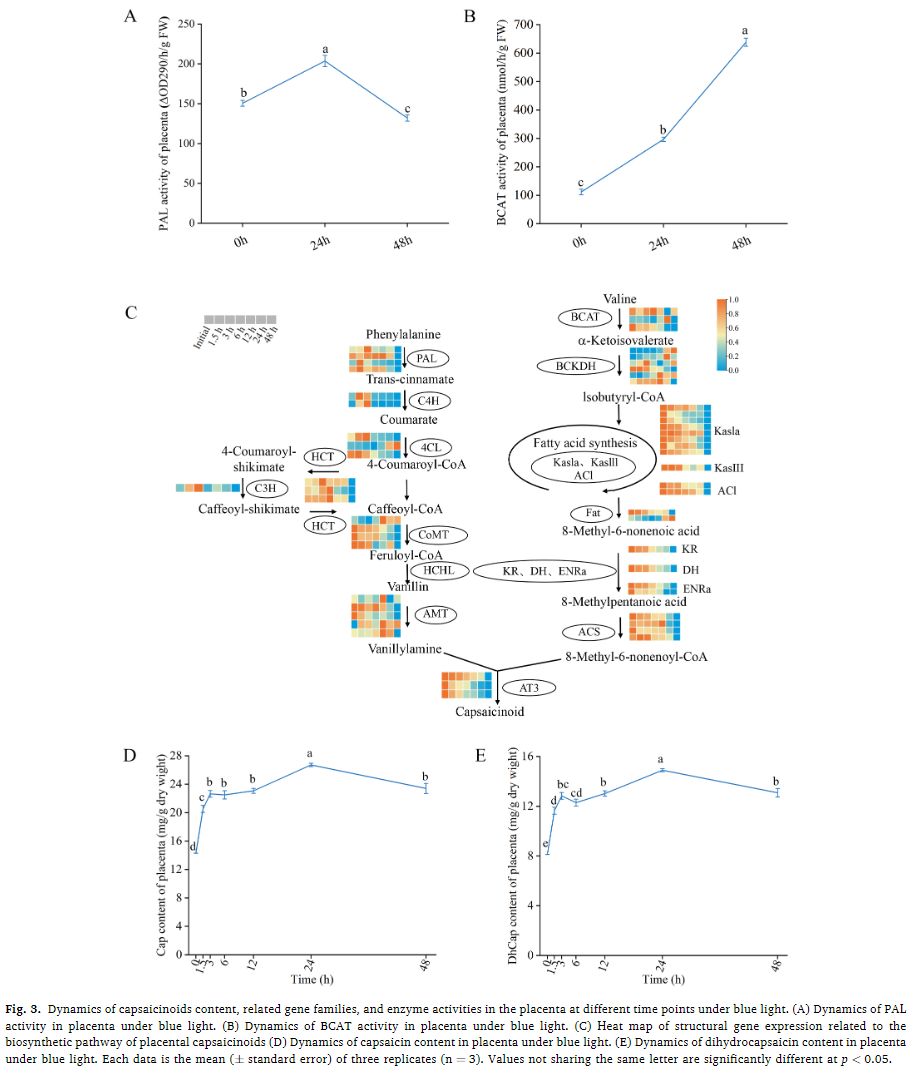
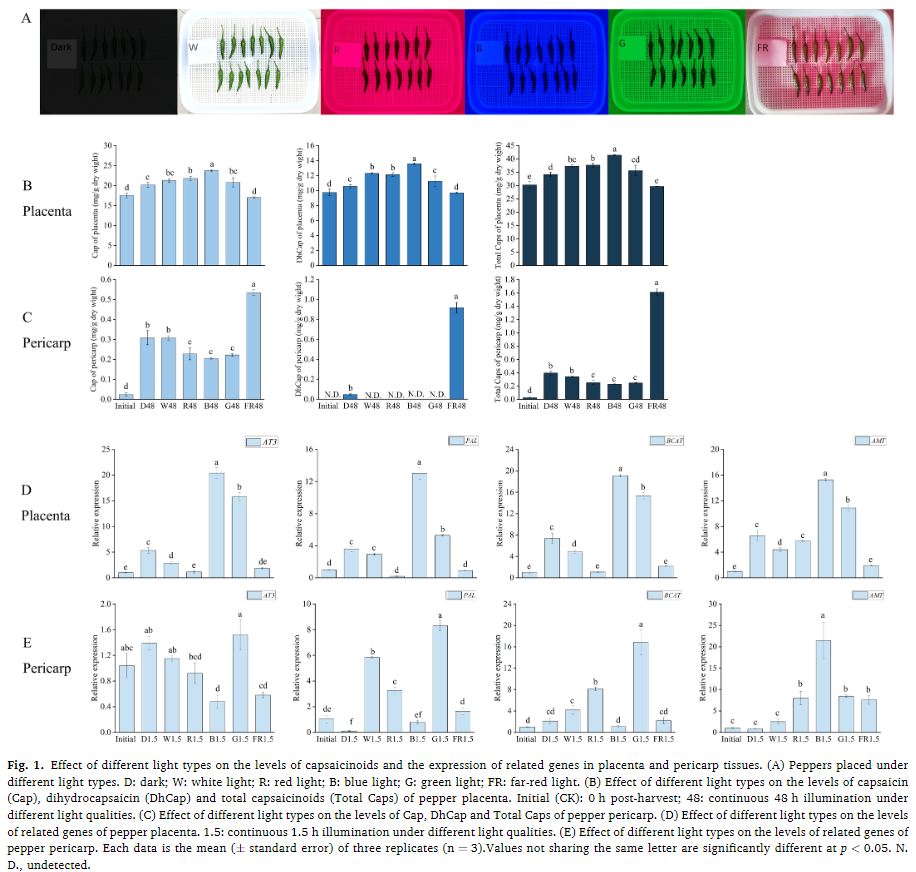
In this study, the pepper cultivar ‘Jiaolong’ was used as the experimental material. Fruits at 35 days after fruit set were collected and treated for 48 hours under white light, red light, blue light, green light, far-red light at 70 μmol·m⁻²·s⁻¹, and darkness, respectively. The results showed that after 48 hours of blue light treatment, the contents of capsaicin, dihydrocapsaicin, and total capsaicinoids in the placenta increased by 35.4%, 39.3%, and 36.8%, respectively, compared with the initial levels, significantly outperforming the other light-quality treatments. Time-course analysis showed that under blue light, the contents of capsaicin and dihydrocapsaicin in the placenta reached their peak at 24 hours and then declined slightly.
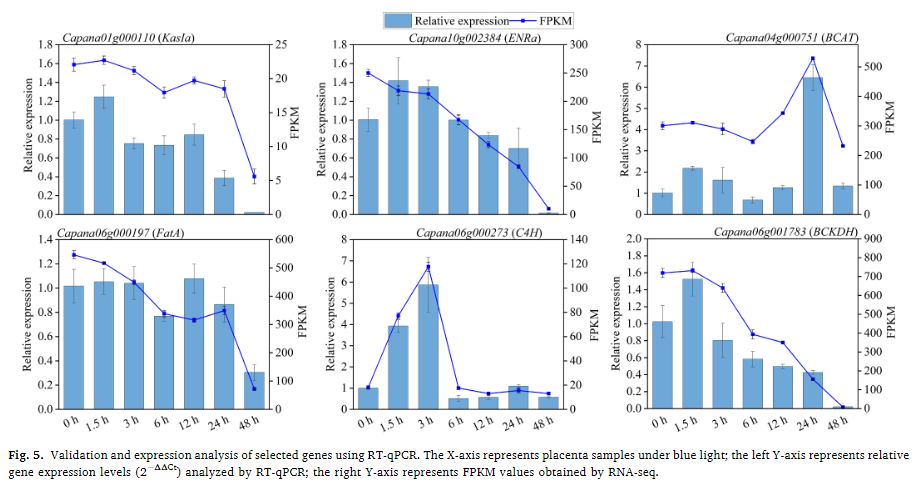
Enzyme activity assays showed that under blue light treatment, the activities of phenylalanine ammonia-lyase and branched-chain amino acid aminotransferase continued to increase, consistent with the trend of capsaicin accumulation. Gene expression analysis indicated that after 1.5 hours of blue light treatment, key capsaicin biosynthesis genes in the placenta, including CaAT3, CaPAL, CaBCAT, and CaAMT, were significantly upregulated. In addition, most structural genes involved in the capsaicin biosynthesis pathway, including fatty acid biosynthesis genes CaKasIa, CaKasIII, CaACl, CaFat, CaKR, CaDH, CaENRa, CaACS, and CaCoMT, showed strong responses to blue light within 0–12 hours.
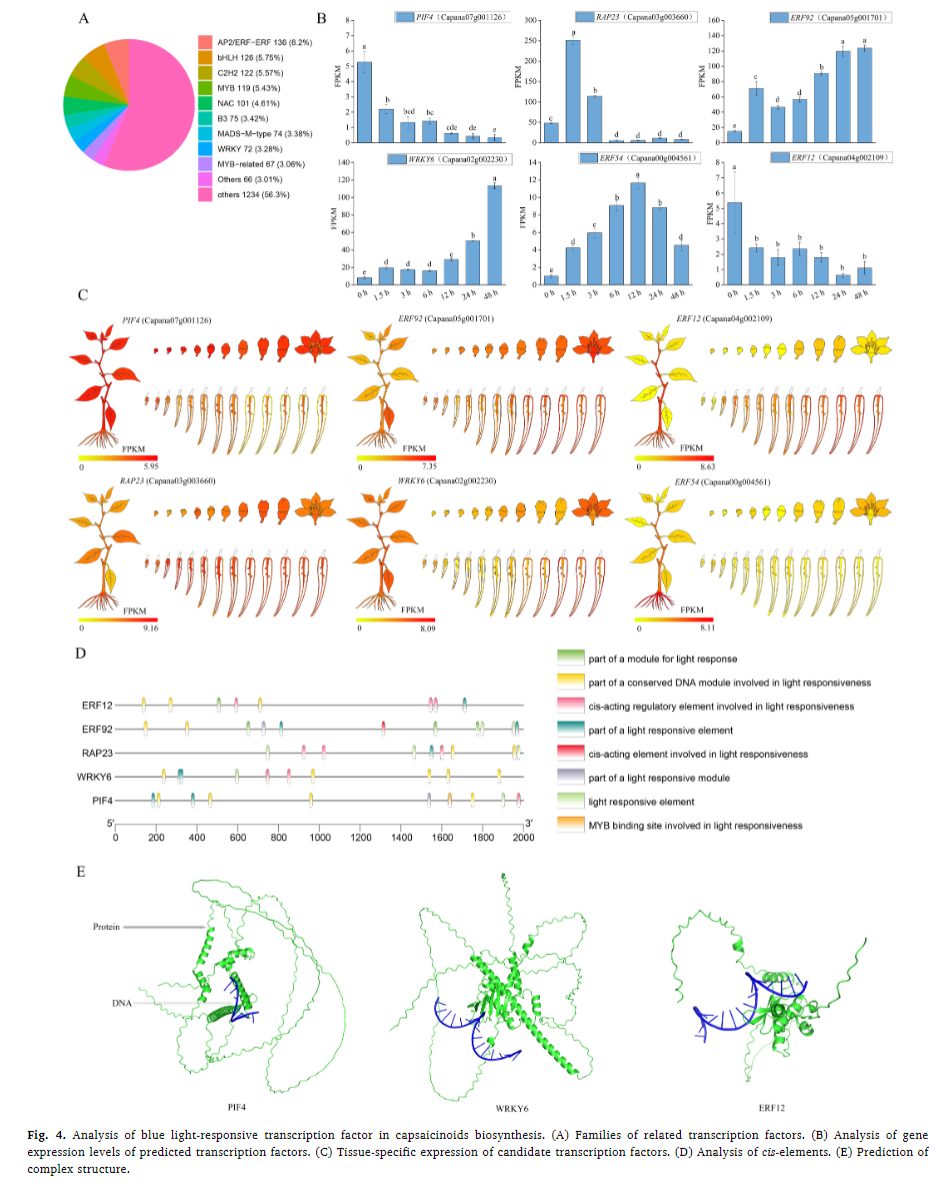
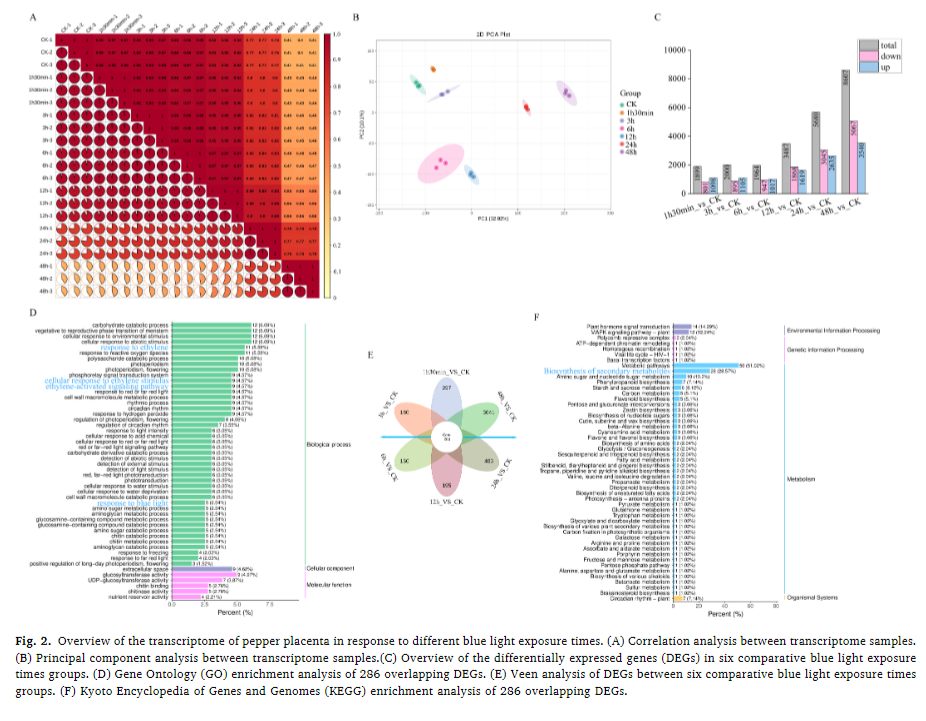
Transcriptome sequencing identified a total of 286 genes that were continuously differentially expressed at multiple time points after blue light treatment. KEGG enrichment analysis showed that these genes were significantly enriched in metabolic pathways and secondary metabolite biosynthesis pathways. Further analysis revealed that blue light induced 691 differentially expressed transcription factor genes, including 40 MYB, 26 WRKY, 48 AP2/ERF-ERF, and 40 bHLH family members. Through GO enrichment, expression pattern analysis, and tissue-specific analysis, CaPIF4, CaERF12, and CaWRKY6 were identified as candidate key transcription factors involved in blue light-regulated capsaicin biosynthesis. Promoter analysis showed that these genes all contain multiple light-responsive cis-acting elements. Protein-DNA interaction prediction suggested that CaPIF4 from the bHLH family, CaWRKY6 from the WRKY family, and CaERF12 from the AP2/ERF family may directly bind to the CaAT3 promoter and regulate its expression.