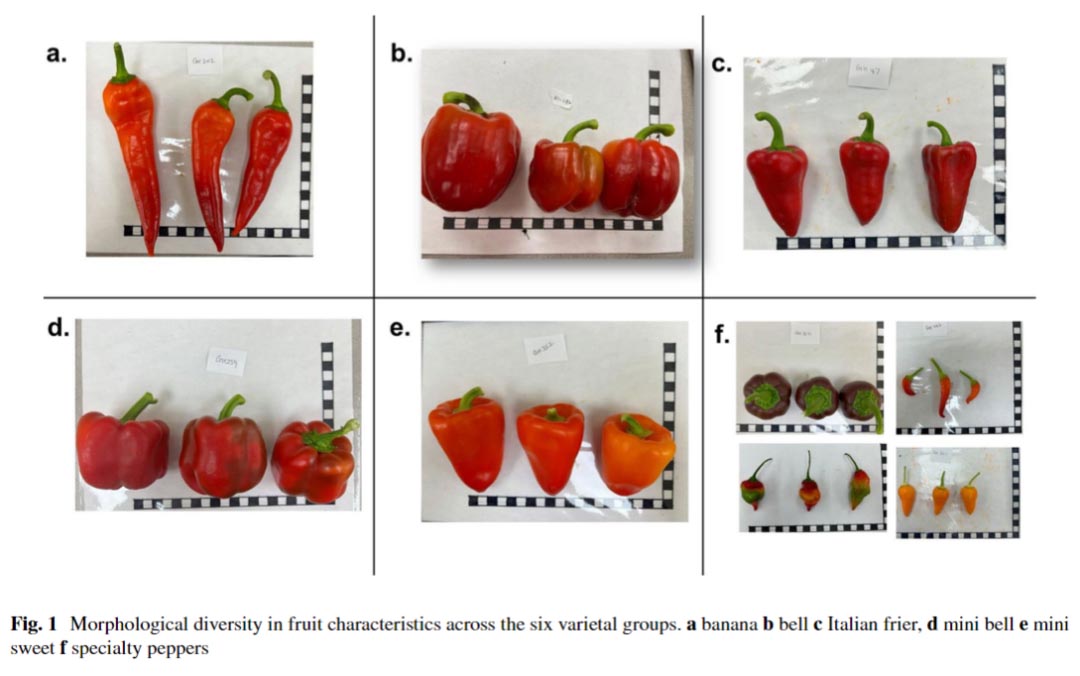
Chili pepper germplasm resources contain rich genetic diversity, which is an important foundation for disease resistance breeding and variety improvement. However, in-depth analysis of the genetic background and discovery of disease resistance genes in large-scale germplasm resources is still needed. Recently, a research team from the University of Georgia and other institutions conducted a systematic morphological and SSR marker analysis on 485 chili pepper germplasm resources, revealing their genetic diversity and population structure, and screening out SSR markers related to resistance to Phytophthora capsici and superior resistant germplasm. The relevant research results, entitled “Morphological and simple sequence repeat (SSR)-based diversity of Capsicum germplasm characterizes population structure and enables marker-assisted selection for Phytophthora capsici resistance,” were published in the academic journal Euphytica.
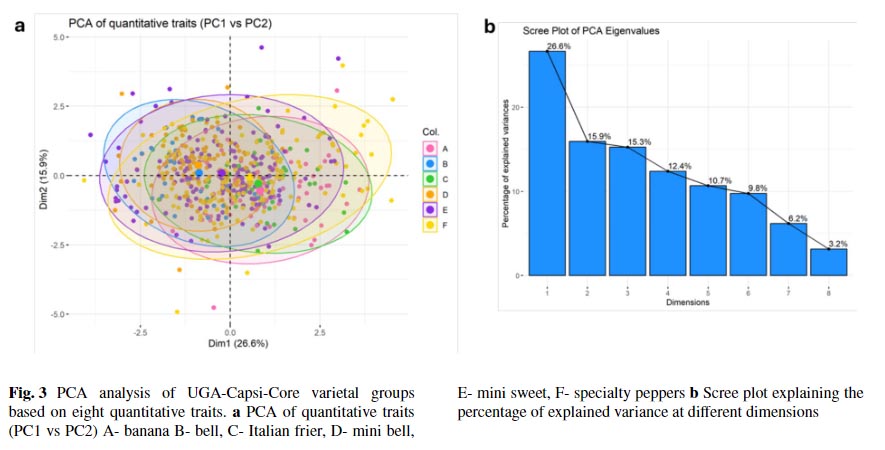
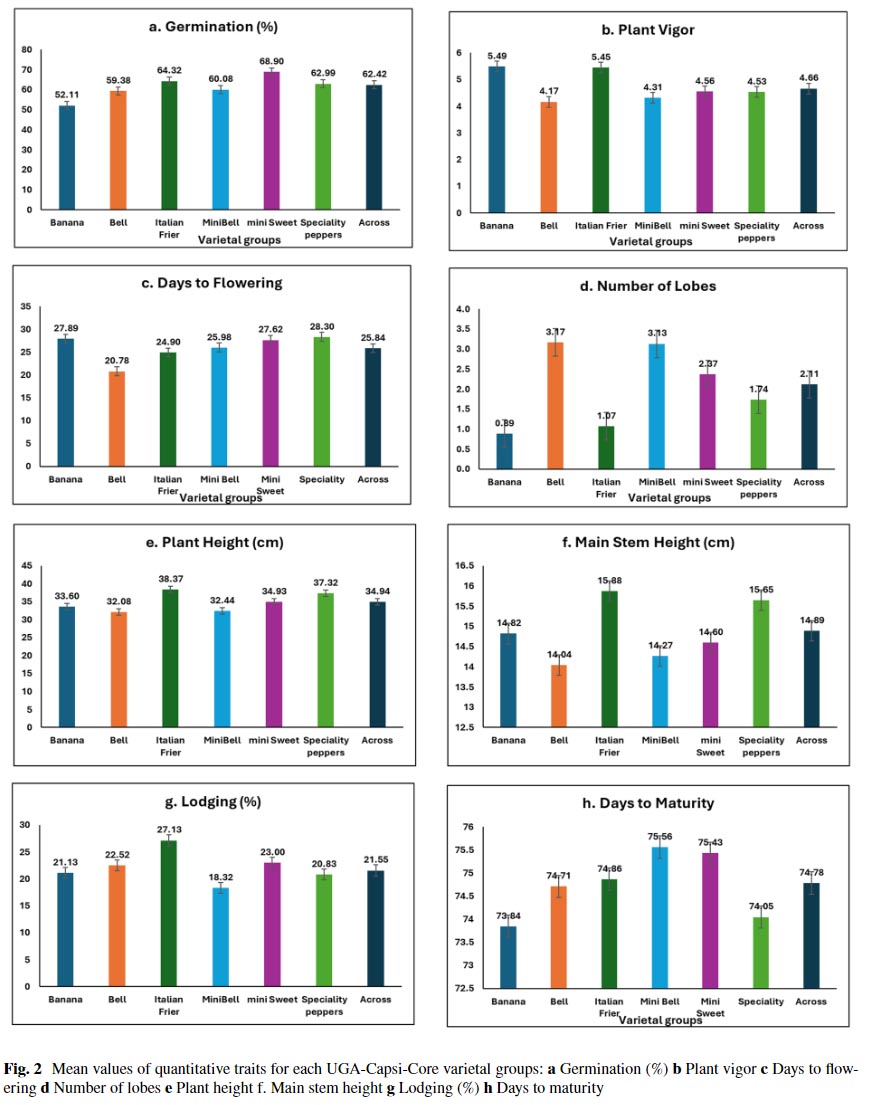
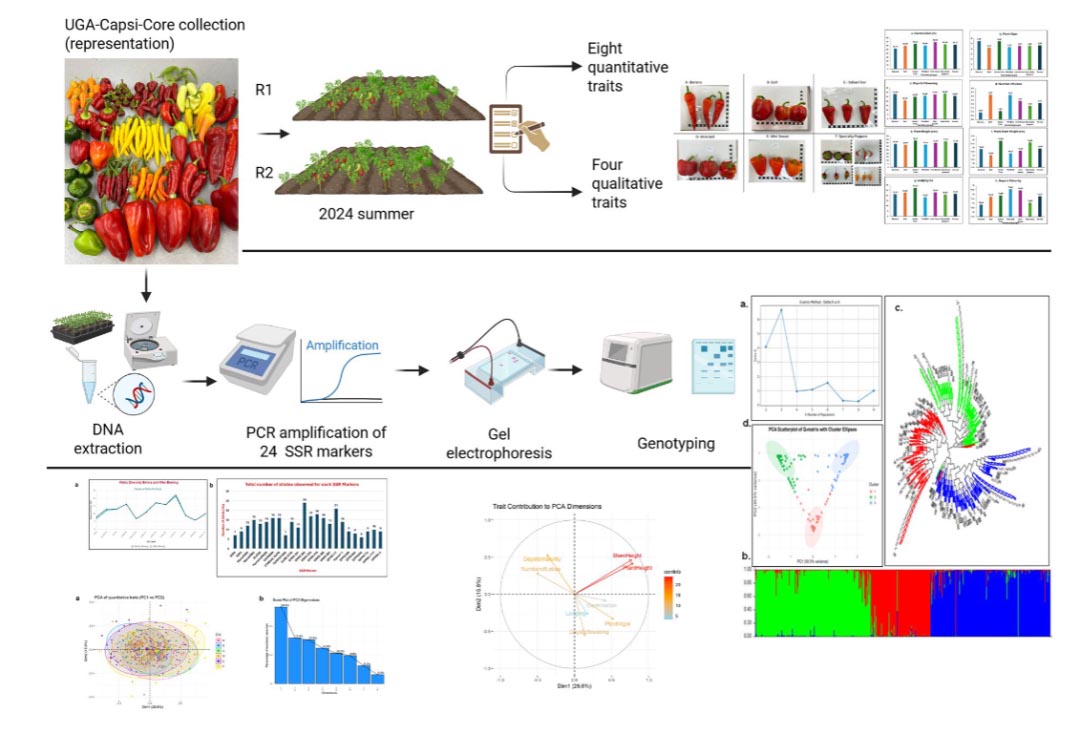
The UGA-Capsi-Core germplasm bank used in this study contains 485 chili pepper resources, mainly cultivated varieties, with a small number of wild relatives. The study first evaluated the agronomic traits of 352 accessions in the field, recording eight quantitative traits (germination rate, plant vigor, flowering time, maturity time, plant height, main stem height, lodging rate, and number of fruit segments) and four qualitative traits (plant growth habit, leaf shape, fruit position, and fruit color). The results showed significant differences among germplasms in germination rate, plant vigor, plant height, and number of fruit segments. The broad-sense heritability of the number of fruit segments was the highest (76.5%), indicating that this trait is strongly genetically controlled and suitable for direct selection. Principal component analysis showed that plant height and stem height were the main contributors to variation (PC1 contributed 26.65%), while flowering time and maturity time explained the second dimension of differentiation (PC2 contributed 15.93%). Correlation analysis showed a significant positive correlation between plant height and stem height (r=0.727), while the number of fruit segments was weakly negatively correlated with plant vigor and plant height.
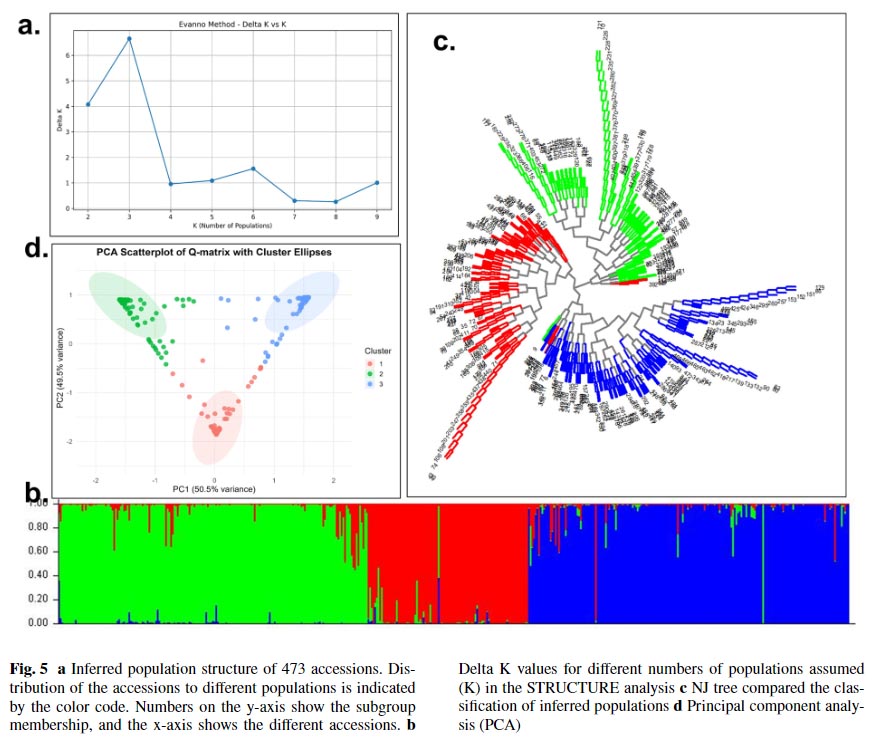
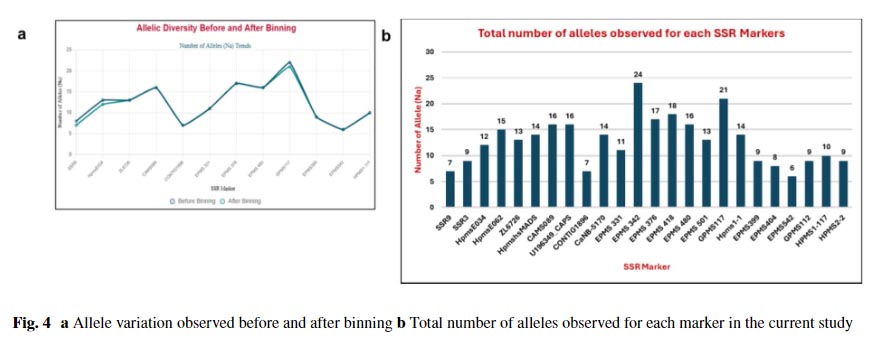
The study further utilized 31 SSR markers associated with resistance to Phytophthora capsulatum to genotype all 485 accessions, ultimately selecting 24 markers with high polymorphism and good reproducibility for subsequent analysis. These 24 markers detected a total of 308 alleles, averaging 12.83 alleles per locus, with an average polymorphism information content (PI) of 0.80. Markers such as GPMS117 (PIC=0.917), EPMS342 (0.907), and CaNB-5170 (0.888) showed extremely high information content. Population structure analysis divided the 473 accessions into three main genetic groups (K=3), consistent with the results of principal component analysis and neighbor-joining tree analysis. Although all three groups were dominated by cultivated species, groups 1 and 2 also contained a small number of other species, suggesting interspecific gene introgression or historical hybridization.
Importantly, this study preliminarily screened a highly resistant Phytophthora blight germplasm, UGA-CAPS-374 (conical-bell-shaped), and two moderately resistant germplasms (UGA-CAPS-392 and UGA-CAPS-255), through field inoculation trials. Marker-trait association analysis identified 12 SSR markers significantly associated with resistance (SSR3, HPMSE062, HPMShs-MADS, CAMS089, U196349_CAPS, EPMS331, EPMS376, EPMS418, EPMS480, EPMS501, EPMS404, and GPMS112), many of which are located in the major resistance QTL region on chromosome 5. These markers provide an important tool for marker-assisted breeding of Phytophthora blight resistance in peppers.
This study, for the first time, systematically integrated morphological evaluation with SSR marker analysis related to Phytophthora blight resistance in 485 pepper germplasm resources, revealing rich allelic diversity (an average of 12.83 alleles per marker) and a clear population structure (three genetic groups). It also preliminarily identified resistant germplasm and associated markers. This research provides important theoretical and material basis for the construction of core pepper germplasm, the protection of genetic diversity, and disease-resistant breeding, and lays a solid foundation for subsequent genome-wide association studies and marker-assisted selection breeding.