Capsaicin is a unique secondary metabolite found in pepper fruits, contributing its spiciness and possessing significant value in food, medicine, and agriculture. The MYB transcription factor family plays a crucial role in the regulation of plant secondary metabolism, but its regulatory mechanism in capsaicin biosynthesis remains to be explored. Recently, a research team from Yunnan Agricultural University and other institutions identified a MYB transcription factor, CcMYB1R1, and revealed its molecular mechanism of positively regulating capsaicin biosynthesis by directly binding to and activating the promoters of key structural genes CcCOMT and CcHCT. The relevant research results, titled “The transcription factor CcMYB1R1 regulates capsaicinoids biosynthesis in pepper fruits,” were published in the academic journal Scientia Horticulturae.
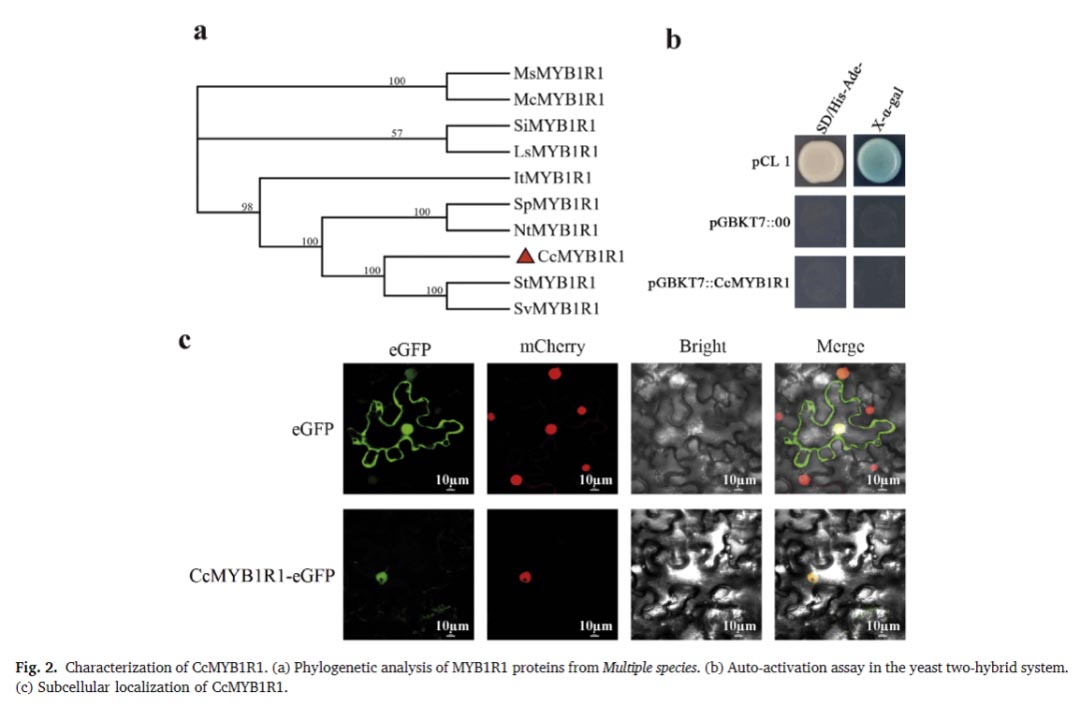
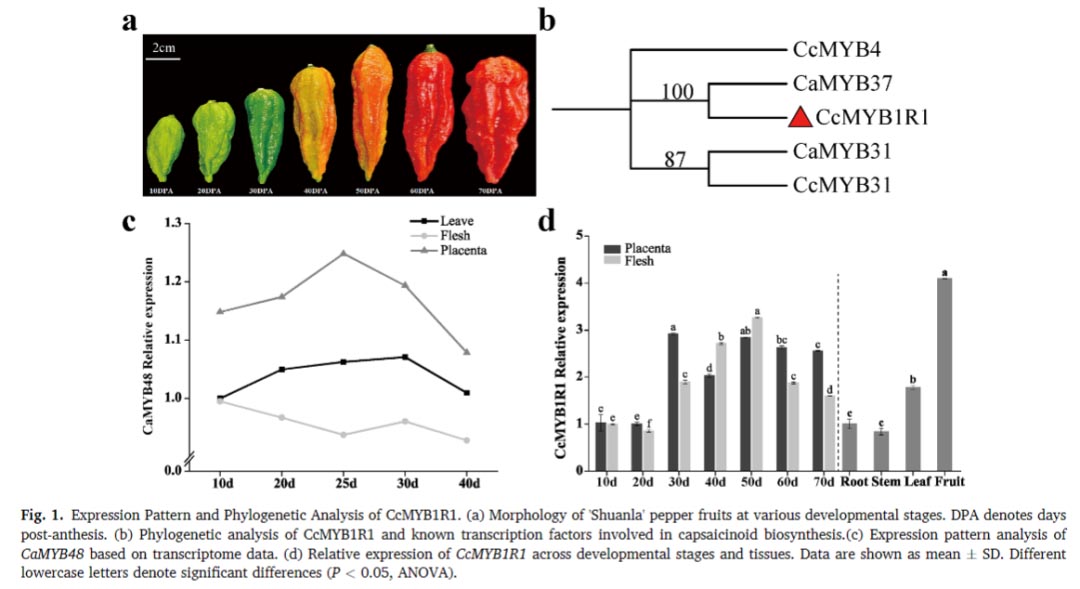
This study used the Yunnan high-capsaicin local variety ‘Shuanla’ as material and screened for the candidate transcription factor CcMYB1R1, which was highly correlated with the capsaicin accumulation trend, based on transcriptome data. Expression pattern analysis showed that CcMYB1R1 was highly expressed in both the placenta and pulp, peaking at 30 days post-flowering, coinciding with the peak period of capsaicin accumulation. Phylogenetic analysis indicated that CcMYB1R1 was most closely related to the previously reported capsaicin regulator CaMYB37. Subcellular localization confirmed that CcMYB1R1 was located in the cell nucleus, and yeast autoactivation experiments showed no transcriptional autoactivation activity.
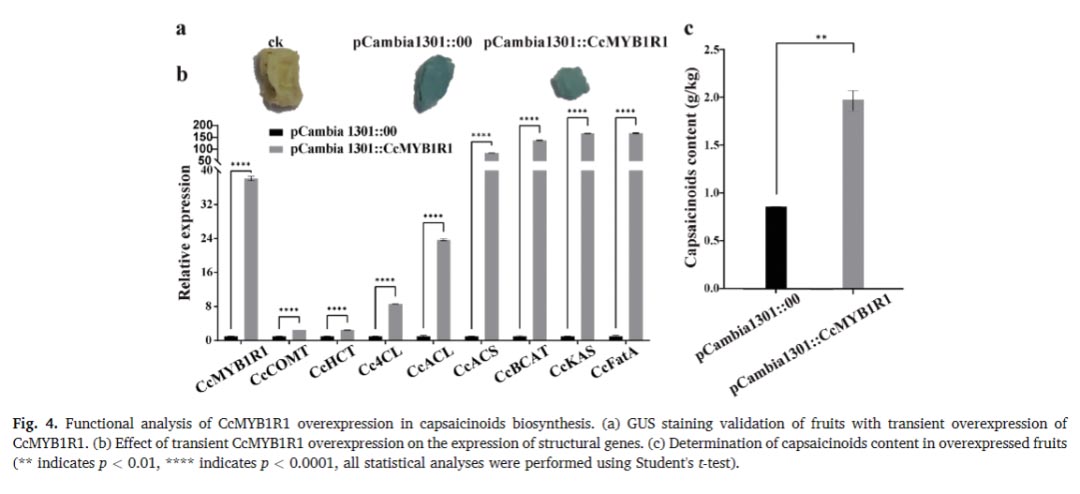
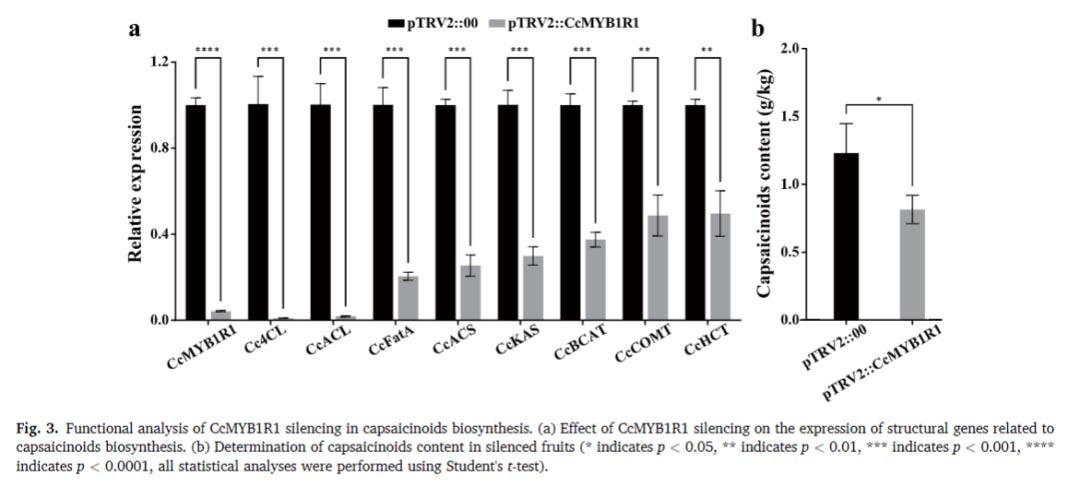
Functional validation showed that silencing CcMYB1R1 using viral-induced gene silencing significantly decreased capsaicin content, and the expression of multiple capsaicin synthesis structural genes (including Cc4CL, CcCOMT, and CcHCT) was inhibited. Conversely, transient overexpression of CcMYB1R1 significantly increased capsaicin content and the expression levels of structural genes.
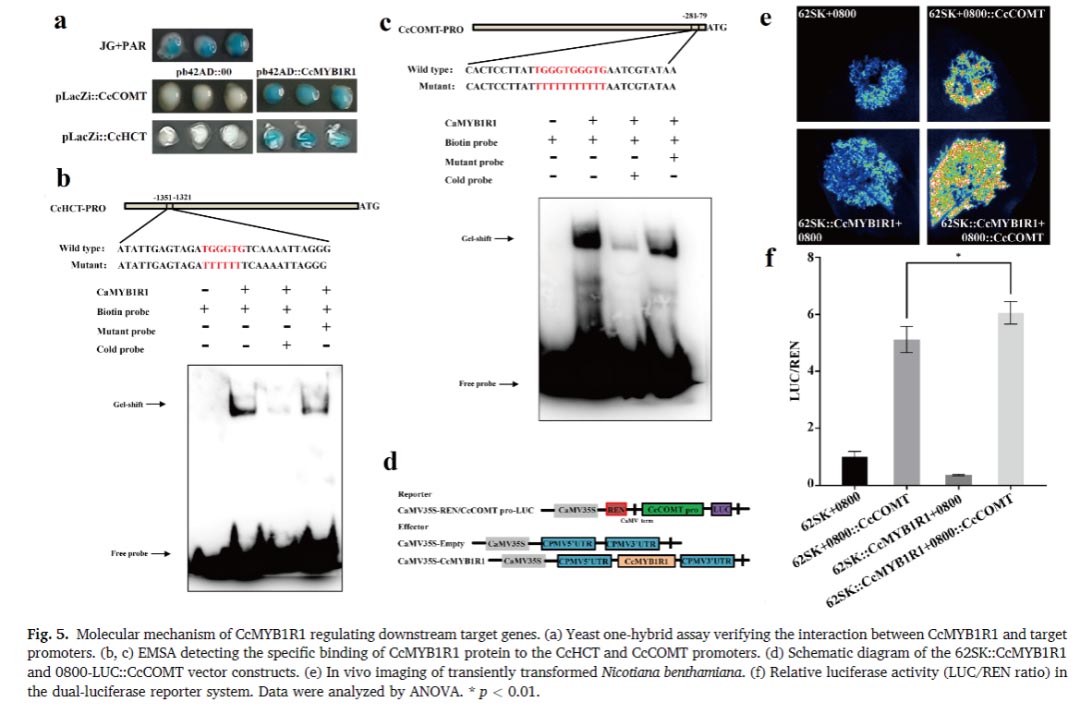
To elucidate its molecular mechanism, yeast one-hybrid screening revealed that CcMYB1R1 can bind to the promoters of CcCOMT and CcHCT. Electrophoretic mobility shift assays further verified that the CcMYB1R1 protein specifically recognizes the “TGGGTGGGTG” motif in the CcCOMT promoter and the “TGGGTG” motif in the CcHCT promoter. Dual-luciferase reporter assays confirmed that CcMYB1R1 can significantly activate the transcriptional activity of the CcCOMT promoter.
In summary, this study reveals for the first time the molecular mechanism by which CcMYB1R1, as a transcriptional activator, directly binds to specific motifs in the CcCOMT and CcHCT promoters, thereby positively regulating capsaicin biosynthesis. This discovery not only enriches the theoretical understanding of the capsaicin synthesis regulatory network but also provides new gene targets and theoretical basis for the molecular improvement of chili spiciness and precision breeding.